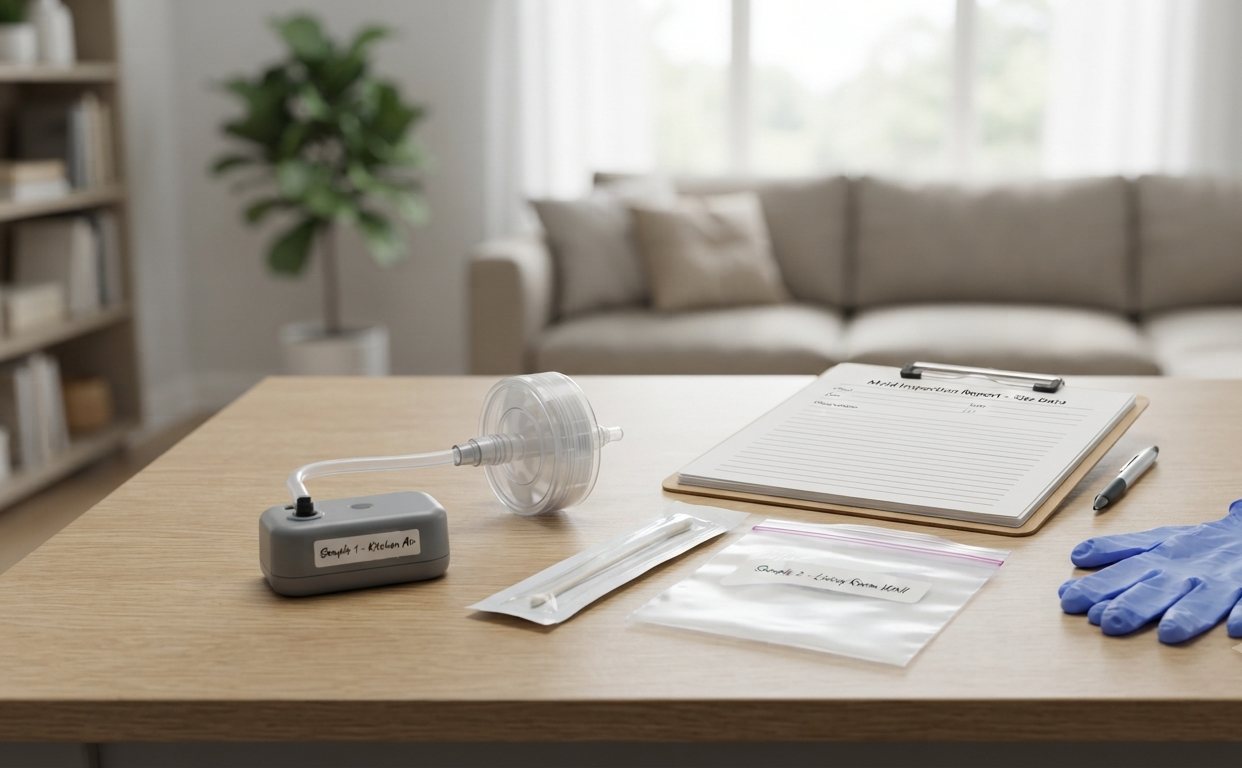
Start with a defined question
An indoor air quality conversation is most useful when it begins with a specific observation: a recurring odor, a room that feels damp, or a change after renovation or a leak. Record where and when the concern occurs and whether it tracks with occupancy or HVAC use.
Choose the assessment before the test
Ask the professional which observations or measurements address your question. A broad package of tests is not automatically the best starting point. Request a written explanation of what each proposed test can establish and what it cannot.
Know the limits of a mold result
Mold sampling does not measure every possible indoor air concern. EPA notes that federal airborne mold limits have not been established. A qualified assessor should explain results in context rather than offering a universal “safe” score.
If your concern involves personal symptoms, discuss those with a healthcare professional. A building report serves a different purpose from a medical evaluation.
Questions to ask before agreeing to work
- What exact question will this assessment answer?
- Which measurements are included and why?
- How will results affect the proposed next step?
- What concerns fall outside the assessment?
A common question
Does a mold test give a complete indoor air quality score?
No. Mold sampling addresses a particular part of the assessment. Ask what else needs to be evaluated for the concern you described.