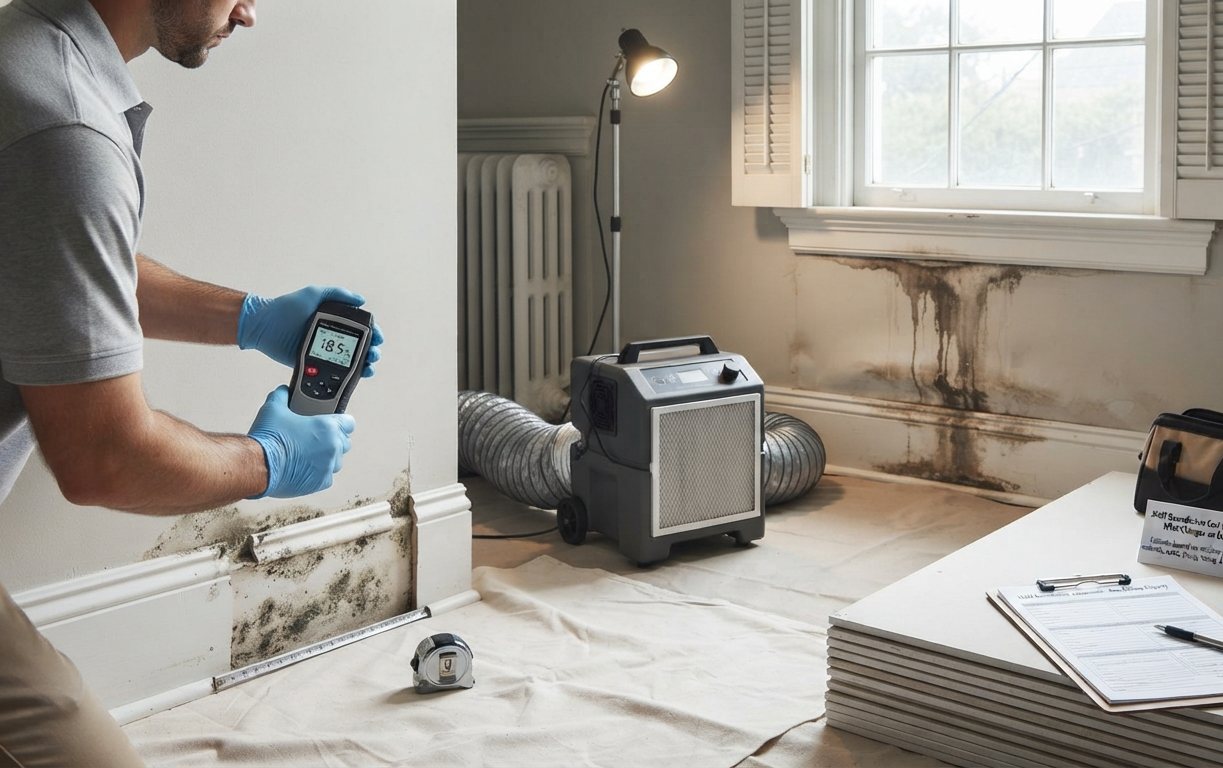
A dark patch beside a baseboard may require limited cleanup, while a similar mark beneath a window can point to wet insulation or a leak inside the wall. That is why a responsible answer to mold remediation cost in New Orleans starts with the property, not a generic citywide average. The estimate depends on the moisture path, affected materials, access, and whether drying, testing, or reconstruction is included.
Quick Answer
- There is no dependable flat price because the visible growth may be smaller than the damp or damaged area behind it.
- The main cost drivers are affected area, material type, access, containment, drying time, disposal, testing, and reconstruction.
- Inspection, testing, remediation, water-damage drying, and rebuilding may appear as separate line items.
- Two quotes are comparable only when they cover the same rooms, materials, equipment, duration, and completion criteria.
- Insurance coverage depends on the policy, cause of loss, exclusions, limits, and insurer review; it should never be assumed.
Why There Is No Single Mold-Remediation Price
There is no single reliable answer to “how much is mold remediation in New Orleans?” because the contractor is pricing property-specific work: moisture investigation, protection, cleaning or removal, drying, disposal, and sometimes repairs.
Visible area and actual work area may differ
The patch you see may not show the full damp area. Louisiana public-health guidance notes that mold and moisture can be hidden behind walls, baseboards, flooring, cabinets, wallpaper, or furniture, so an estimate should explain how the proposed boundary was determined.
Two similar-looking stains can have different moisture sources
A ceiling stain after wind-driven rain is a different job from discoloration caused by HVAC condensation. A mark near the floor may come from plumbing, storm water, or crawl-space moisture, and each source changes the work required.
Estimates may include different services
One proposal may cover removal and cleaning only; another may include containment, drying, verification, and rebuilding. Before comparing totals, separate removal, remediation, and restoration into distinct parts of the proposed work.
The Main Factors That Change the Estimate
The estimate changes most when the work area, materials, access, and moisture source change. Containment, equipment days, disposal, testing, and repairs then add or remove layers from the scope.
Size of the affected area
A small accessible area generally takes less labor and protection than a condition extending through several rooms. The quote should state whether it prices visible growth, a suspected damp area, or a larger controlled work zone.
Type of building material
Hard surfaces may sometimes be cleaned and dried, while drywall, insulation, carpet padding, and composite materials can retain moisture or become damaged. EPA guidance emphasizes correcting the water problem and discarding materials that cannot be cleaned and dried.
Hidden wall, ceiling, or floor cavities
Concealed spaces create uncertainty because the complete condition may not be visible until a controlled opening is made. The estimate should distinguish confirmed work from possible added removal and explain what finding would trigger a change order.
Active water source
Ongoing leakage or condensation can prevent drying and allow the problem to return. When materials remain wet, address the water event before rebuilding. EPA describes moisture control as central to mold control and recommends drying wet materials promptly, commonly within 24 to 48 hours when conditions allow.
Ease of access
An open wall is easier to work on than a low crawl space, steep attic, enclosed chase, or ceiling above stairs. Restricted access affects setup, debris removal, equipment placement, and inspection.
Containment requirements
Containment helps keep dust, debris, and disturbed material out of adjoining spaces. The needed setup depends on the work method, project size, occupancy, nearby belongings, HVAC openings, and route used to remove waste.
Drying equipment and project duration
Air movers, dehumidifiers, filtration devices, and monitoring visits may be priced by quantity, day, or project. Ask what each machine is intended to do and what moisture or cleanliness criterion will determine when it can be removed.
Disposal and site protection
Costs rise when debris must be wrapped and carried through finished rooms, down stairs, or out of an occupied business. Floor protection, contents moving, barriers, and final cleaning should be identified.
Testing or verification
Testing is not automatically needed for every visible condition. Louisiana health guidance says assessment is mainly visual and moisture-focused and that testing may have limited value without a specific question.
When sampling is proposed, the estimate should explain who will collect it, how many samples are planned, which laboratory will analyze them, and what decision the results are intended to support.
Reconstruction after removal
Remediation may leave the area clean and dry but not rebuilt. Insulation, drywall, paint, trim, flooring, cabinets, and finish work may require a separate restoration estimate, so the proposal should clearly state where remediation ends.
Inspection, Testing, Remediation, and Restoration Are Different Line Items
These services answer different questions and should not be bundled under an unexplained “mold treatment” charge.
Inspection and moisture investigation
Inspection looks for visible conditions, leak history, damaged materials, odor patterns, and moisture clues. The first line item makes more sense when you understand the difference between inspection and testing. Ask whether written findings, photographs, or moisture readings are included.
Laboratory sampling
Air, surface, or material samples add collection, laboratory, and interpretation costs. The proposed locations, sample count, and intended use of the results should be stated.
Removal and cleaning
This is the physical remediation work: protecting the area, removing materials that cannot remain, cleaning retained surfaces, controlling debris, and completing final cleaning. Useful quotes identify materials and approximate quantities instead of relying only on a lump sum.
Drying and monitoring
Drying addresses remaining moisture after leaks, HVAC condensation, or storm-related water intrusion. Monitoring may include repeated readings and equipment adjustments so the area is not closed before the remaining materials are adequately dry.
Repairs and reconstruction
Reconstruction restores the opened area after remediation and drying. The quote should state who handles insulation, drywall, paint, flooring, cabinets, and finish work.
How Property Location Changes the Scope
Location changes access, protection, equipment placement, debris movement, and disruption. The same square footage can produce a different estimate in a bathroom, attic, crawl space, rental, or commercial property.
An open bathroom wall
A wall already opened for plumbing access can reduce uncertainty, but tile, a vanity, shower components, and adjacent flooring may complicate the work. The estimate should still address whether moisture extends beyond the visible opening.
A tight crawl space
Low clearance, damp soil, ducts, plumbing, and insulation make crawl-space work slower and harder to document. Limited access is only part of why raised-home crawl spaces require a separate moisture plan; drainage, condensation, leaks, and ground moisture may also require correction.
An attic with difficult access
Attic work may involve narrow openings, loose insulation, roof framing, HVAC components, wiring, and a long debris route through the home. A roof leak can affect decking, rafters, insulation, and ceiling materials as separate layers.
A multistory commercial property
Commercial work may require loading access, elevator protection, after-hours scheduling, building coordination, and controlled occupant routes. Those requirements can increase scope even when the affected area is not unusually large.
An occupied rental or hotel room
Occupied spaces add contents handling, scheduling, access, and documentation requirements. Property managers may need separate records for the complaint, moisture source, remediation, repairs, and return-to-use decision.
Small Visible Patch vs. Larger Hidden Condition
A small patch and a larger concealed problem should not receive the same scope. The key questions are whether the material is cleanable, the moisture is resolved, and the visible edge reflects the affected area.
A local surface issue on a hard material
A limited condition on tile, metal, glass, or another hard surface may allow straightforward cleaning after the moisture source is corrected. Nearby grout, caulk, wallboard, cabinet backing, and flooring still deserve attention because they may be more absorbent.
Wet drywall and insulation
Drywall may look lightly stained while its paper facing or the insulation behind it remains damp. EPA guidance highlights walls, ceilings, crawl spaces, and attics as commonly overlooked wet areas, making moisture history more useful than appearance alone.
Recurring growth after previous cleaning
When discoloration returns after wiping or painting, the estimate should focus on the unresolved source. EPA advises against painting or caulking over moldy surfaces before cleaning and drying them because a coating does not correct the damp condition underneath.
Multiple rooms affected by one water event
One roof failure, supply-line leak, or storm event can move water through ceilings, walls, and floors. The work boundary should follow documented moisture paths without assuming every mark is unrelated—or that the entire property is affected.
Why Two Estimates May Be Far Apart
Two estimates are often far apart because they use different assumptions. Compare the work described, not just the final number.
Different assumptions about affected materials
One company may plan to remove drywall only, while another includes insulation, flooring, cabinets, or trim. Ask each estimator to identify the starting work area and describe how concealed findings would change it.
One quote includes containment and another does not
Containment requires setup, materials, labor, and final cleaning. Its omission may be reasonable for a limited task, or it may leave important protection unpriced, so the contractor should explain the proposed work method.
One quote includes drying or testing
Equipment days, monitoring visits, laboratory charges, and interpretation can create a large difference. Confirm whether the higher estimate includes these services and whether the lower quote expects them to be performed by someone else.
One quote includes rebuilding
A combined remediation-and-reconstruction quote will be higher than one that stops at exposed framing. Compare remediation separately from drywall, insulation, texture, paint, trim, flooring, or cabinets so the unfinished work is visible.
Unclear allowances for hidden damage
Allowances can be reasonable when damage is concealed, but they need a trigger, unit cost, quantity, or approval process. A better estimate explains what discovery would change the price and how authorization will be obtained.
How to Compare Estimates Line by Line
Compare estimates by making the scopes equivalent before judging price. Price is only one part of the decision, so use a contractor-selection checklist alongside the estimate. A one-page comparison can expose exclusions that are easy to miss in conversation.
Confirm the same rooms are included
List each room, wall, ceiling, floor area, attic section, or crawl-space zone in every quote. Check whether adjacent rooms, contents, hallways, HVAC openings, and debris routes receive protection.
Compare material-removal quantities
Look for square footage, linear footage, item counts, or clear physical boundaries. Exact quantities may change after opening a cavity, but the original assumption should be specific enough to compare.
Check equipment and duration assumptions
Record the equipment type, quantity, expected days, monitoring visits, and pricing method. Ask which conditions could shorten or extend the duration and how the contractor will document that decision.
Separate known work from possible change orders
Known work belongs in the base scope. Concealed possibilities should appear as alternates, unit prices, allowances, or staged authorizations.
Look for a clear completion standard
The proposal should explain how the area will be evaluated before containment is removed or rebuilding begins. Visual cleanliness, dryness, completed cleaning steps, and any agreed verification procedure are more useful than “treat affected area.”
Documentation and Insurance Questions
Documentation should begin before demolition when it is safe. Photographs, repair records, receipts, drying notes, and estimates can help explain the loss, but they do not guarantee coverage.
Photograph the original condition
Take wide images of the room and close images of staining, wet materials, damaged finishes, and the apparent water path. Photograph items before disposal when practical.
Keep the water-source repair documents
Save roof, plumbing, HVAC, appliance, and storm-repair records. They help show whether the source was corrected and may be relevant to an insurer’s review.
Ask who documents drying and removal
Clarify who records initial moisture, equipment, monitoring, removed materials, photographs, and final conditions. Louisiana Department of Insurance storm guidance advises keeping receipts and repair records and, when circumstances permit, avoiding disposal before an adjuster can inspect damaged items.
Review the policy rather than assuming coverage
Homeowners insurance does not automatically cover mold removal. Louisiana disclosure materials state that mold damage may or may not be covered under a policy and that the policy language controls; standard homeowners coverage also treats flood separately.
Coverage may depend on the cause of loss, exclusions, endorsements, sublimits, reporting duties, and insurer review. Read the policy and speak with the insurer or a qualified insurance professional about the specific claim.
Avoid presenting the contractor’s opinion as an insurer decision
A contractor can document property conditions and prepare a repair scope, but the contractor does not decide coverage. Keep the technical question—what the building needs—separate from the insurer’s policy determination.
How to Reduce Unnecessary Scope Creep
Scope creep is best controlled by correcting the moisture source, documenting assumptions, and approving uncertain work in defined stages.
Repair the moisture source early
Repairing a roof leak, plumbing line, condensate problem, or drainage issue makes the remediation plan more stable. When only a temporary control is possible, document what it does and does not solve.
Ask for written assumptions
Ask what is believed to be wet, which materials can remain, which are expected to be removed, and what access is required. Written assumptions are especially useful around plaster, built-ins, flooring, attics, and crawl spaces.
Authorize exploratory work in defined stages
A limited opening may show whether moisture extends into a cavity before larger demolition is approved. Define the opening, protection, documentation, and approval step before additional work begins.
Require approval for material changes
The agreement should identify who may authorize added removal, equipment days, testing, or reconstruction. Property managers should name that person before work begins and require written confirmation of substantial changes.
Keep reconstruction separate when helpful
Separate scopes can make mold cleanup cost and later repairs easier to understand. A combined proposal can also work, but it should still show where remediation ends and reconstruction begins.
What Trusted Public Health and Cleanup Guidance Emphasizes
Public guidance consistently centers the response on moisture control, safe cleanup, and complete drying rather than cosmetic treatment alone.
- Correct the water or moisture source. EPA guidance identifies moisture control as the central step in controlling mold.
- Dry wet materials promptly. EPA commonly uses 24 to 48 hours after a leak or spill as a practical drying target, although actual conditions and materials still matter.
- Do not paint or caulk over moldy, damp surfaces. Clean and dry them before refinishing.
- Use suitable protection when disturbing moldy material. CDC guidance includes gloves, eye protection, and at least a NIOSH-approved N95 respirator for cleanup.
- Seek qualified help for larger or complex conditions. Hidden cavities, contaminated water, extensive removal, structural concerns, and occupied commercial settings can require a planned response.
Frequently Asked Questions
Why is mold remediation so expensive?
The price can rise because visible growth may be only one part of the work. Containment, difficult access, porous-material removal, drying, disposal, documentation, and reconstruction can each add labor or equipment.
Does mold inspection cost extra?
Inspection may be separate, included in a broader proposal, or performed by another provider. Ask whether the charge includes a site visit, moisture readings, photographs, written findings, and recommendations.
Is mold testing included in remediation?
Testing is not automatically included and is not necessary for every visible condition. When proposed, the estimate should identify sample types, quantities, laboratory charges, interpretation, and the decision the results are meant to support.
Does homeowners insurance cover mold removal?
Coverage depends on the individual policy and facts of the loss. Cause of water damage, exclusions, mold limits, endorsements, flood involvement, reporting duties, and insurer review may all matter, so review the policy and contact the insurer or a qualified insurance professional.
Can a contractor quote mold remediation by phone?
A contractor may discuss likely next steps by phone, especially with clear photographs and a detailed water history. A dependable fixed estimate usually requires enough information to define the area, materials, access, and moisture source.
Editorial Note
A sound estimate follows the moisture path: what got wet, what stayed wet, and what must happen before the area is closed again. The lowest total is not automatically the best value, and the highest is not automatically the most complete. Keep inspection, testing, drying, remediation, and reconstruction clearly identified. This article provides general information only and is not legal, insurance, or policy-coverage advice.
Discuss the Affected Area and the Estimate
If you have noticed persistent moisture, staining, a musty odor, or visible mold in a New Orleans property, call New Orleans Mold Fix at (504) 520-4589 to discuss the affected area, the known water history, and practical next steps for an assessment.