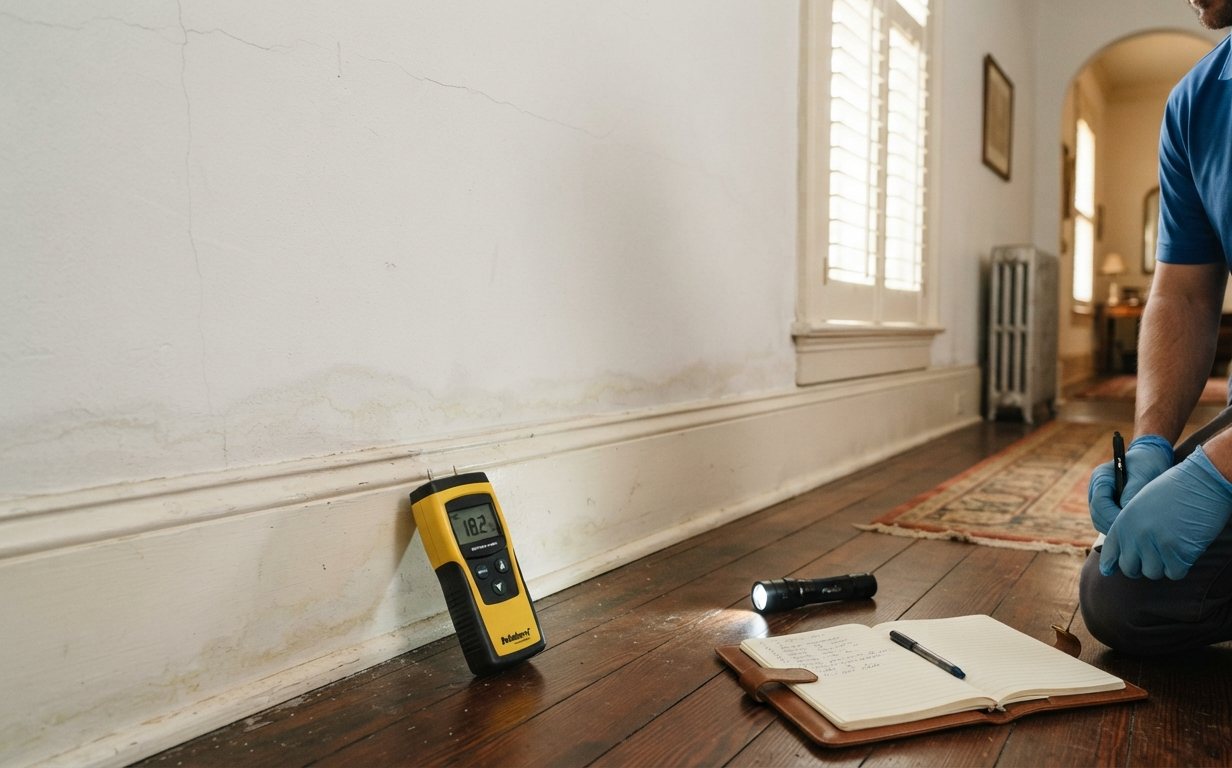
Describe the pattern, not just the vent
An odor at a register is a useful observation, but it does not establish that the duct interior is the source. Tell the assessor whether it occurs at startup, throughout the cooling cycle, or only in one room. Note any recent condensate overflow or work near the air handler.
Ask what the assessment covers
Request a clear description of the components to be inspected and the limits of access. A proposal should distinguish a surface mark on a register from a condition involving the coil, cabinet, drain pan, or internal insulation.
Before agreeing to a cleaning package, ask for evidence of the condition and an explanation of what each proposed task addresses. If contamination is suspected within the HVAC system, consult the EPA guidance below and a qualified professional before operating it.
Coordinate the trades
Ask who handles mechanical repairs and who handles affected building materials. Record whether the quotation includes component access, cleaning, replacement materials, and a follow-up check. Confirm that a cosmetic vent cleaning is not being presented as an assessment of the entire system.
Questions to ask before agreeing to work
- What evidence points to the HVAC system rather than the room?
- Which components are accessible and which remain uninspected?
- Are any proposed treatments suitable for these exact components?
- Who addresses the moisture condition and documents the work?
A common question
Does every musty smell mean the ducts need cleaning?
No. An odor alone does not identify its source. Ask for an assessment before purchasing a whole-system treatment.