Recurring growth, damp materials, musty rooms, or mold tied to a leak.
Mold Remediation in New Orleans for Moisture-Linked Problems
Mold remediation is the full-process page: containment, cleanup, affected materials, drying, moisture source awareness, and recurrence prevention.
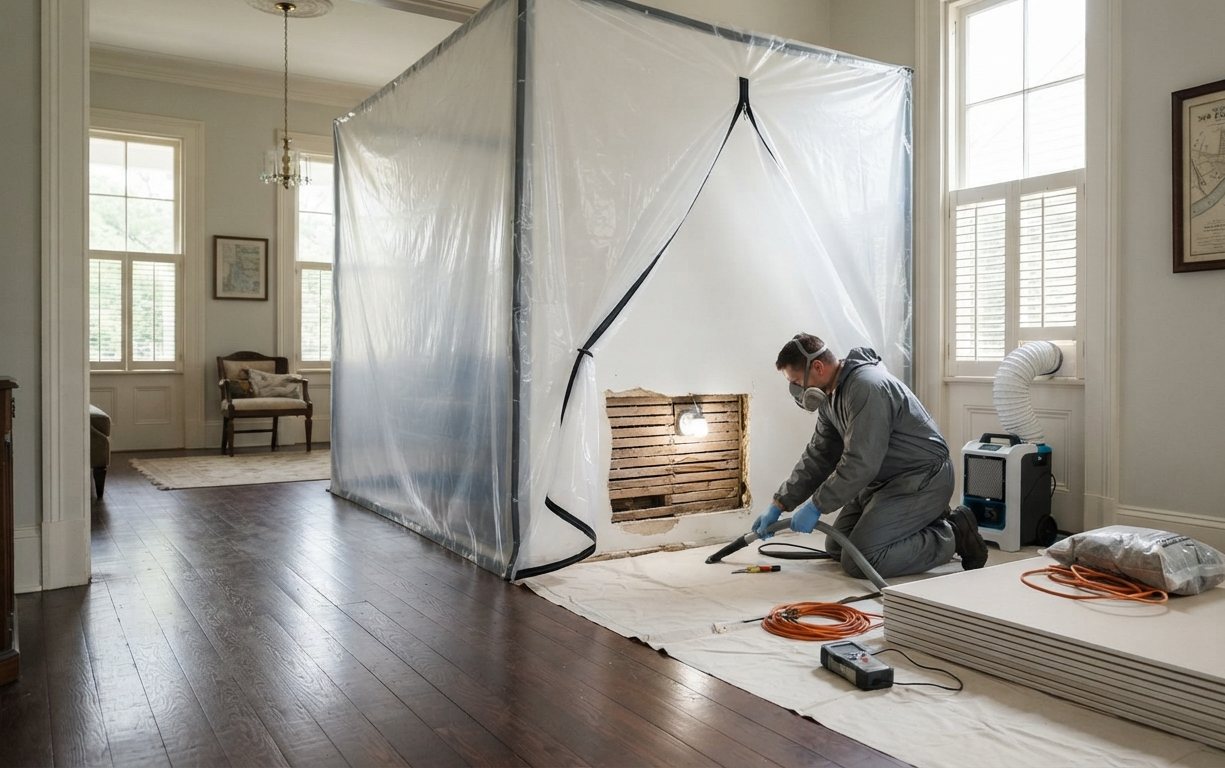
Find the moisture story, then plan containment, cleanup, drying, and material decisions.
Call when the issue feels bigger than surface cleaning or keeps returning.
Call (504) 520-4589When Remediation Is More Than Surface Cleanup
Remediation fits recurring or widespread growth, damp porous materials, multiple affected areas, or a mold problem tied to a leak that was never fully resolved.
The work should connect containment and cleanup with material decisions, drying, and correction of the moisture condition that allowed the problem to continue.
Signs the scope may be broader
- Growth returns after repeated cleaning
- Drywall, insulation, cabinet backing, or flooring stayed wet
- More than one room or material is affected
- A leak or storm event reached hidden cavities
- Cleanup would disturb damaged porous materials
How Remediation Planning Takes Shape
Stop and trace moisture
Active water, condensation, or damp materials must be identified before the cleanup sequence can be planned responsibly.
Set containment and material decisions
The affected area, material type, access, and likelihood of disturbance determine how work should be separated from the rest of the property.
Clean, dry, and reduce recurrence
Removal and cleaning should be followed by drying and practical correction of the conditions that allowed moisture to persist.
Why This Matters in New Orleans
Remediation matters locally because New Orleans buildings can hold moisture in wood, plaster, cabinets, and wall cavities after a leak appears dry on the surface. The work should follow the moisture path, not just the visible stain.
Common spoken questions
Questions about mold remediation
Clear answers to the questions New Orleans property owners often ask before they decide what kind of help fits.
What does mold remediation include in New Orleans?
Mold remediation usually combines containment, controlled cleanup, decisions about affected materials, drying, and correction of the moisture condition that supported the growth. The exact sequence depends on where the moisture traveled and which materials stayed damp.
Who should I call when mold keeps coming back?
Call for mold remediation guidance when growth returns after cleaning or the same room repeatedly smells musty. Recurrence often means the moisture source, hidden affected material, or drying problem has not been fully addressed.
Does mold remediation fix the moisture source too?
A sound remediation plan should identify how moisture reached the affected area and explain what must change to reduce recurrence. Repairs to a roof, pipe, drain, HVAC system, or building envelope may require a separate trade, but the moisture path still needs to be part of the plan.
How is mold remediation different from mold removal?
Mold removal focuses on visible growth and contaminated materials. Remediation is broader because it also addresses containment, cleanup method, drying conditions, and the source or pathway that allowed the mold problem to develop.
When Remediation Is the Better Word
Mold remediation is the right conversation when the issue is tied to moisture, affected materials, containment, cleanup sequence, and preventing the same problem from returning. It is broader than wiping a spot from a surface.
A New Orleans property may need remediation after a roof leak wets insulation, a cabinet leak damages drywall, a closed room develops recurring growth, or a bathroom ceiling keeps spotting after repeated cleaning.
The important distinction is scope. Remediation looks at what fed the growth, what material is involved, how work should be contained, and what drying or source correction belongs in the plan.
Situations That Often Point Toward Remediation
These examples are not automatic diagnoses, but they are stronger remediation signals than a single small surface mark.
- Growth returning after cleaning or painting.
- Mold associated with soft drywall, swollen trim, wet insulation, or damaged cabinets.
- Multiple affected areas after storm, roof, or plumbing water.
- Musty odor from a wall, closet, cabinet, or HVAC-adjacent area after a known water event.
- Commercial, rental, or managed-property concerns where access and documentation matter.
How Remediation Stays Different From Testing and Inspection
Inspection helps identify what is happening. Testing can document what is present in sampled air or on a surface. Remediation is the work path when affected materials and moisture conditions need to be addressed.
That is why this page should not compete with the mold testing page or the mold inspection page. If the question is still "Where is the source?" inspection may come first. If the question is "How do we clean this up and reduce recurrence?" remediation is the better fit.
Remediation standards
What a Better Remediation Conversation Should Cover
Good mold remediation planning is not only about the visible patch. It should connect containment, affected materials, drying, and the source that allowed growth to happen.
Moisture source
What got wet, whether it is still active, and whether New Orleans humidity is slowing drying.
Work area
Which rooms, surfaces, wall cavities, cabinets, or HVAC-adjacent areas may be involved.
Material decision
Whether the concern is surface cleanup, removal of affected material, or a larger remediation scope.
Next-step clarity
Whether inspection, testing, water damage drying, or remediation work should come first.
Not sure where to go next?
Pick the page that matches the problem, not the keyword
Remediation sits between finding the moisture source and deciding what affected materials need containment, cleaning, removal, or drying. These pages help clarify the surrounding service choices.
Discuss a Recurring or Larger Mold Problem
Call with the affected rooms, materials, moisture source, and whether previous cleaning or repairs failed to stop the problem.