Wet drywall, flooring, cabinets, insulation, or indoor materials after a leak or storm.
Water Damage Restoration in New Orleans Before Moisture Becomes Mold
Water damage work focuses on extraction, drying, dehumidification, wet materials, and mold prevention after leaks, storms, flooding, or appliance failures.
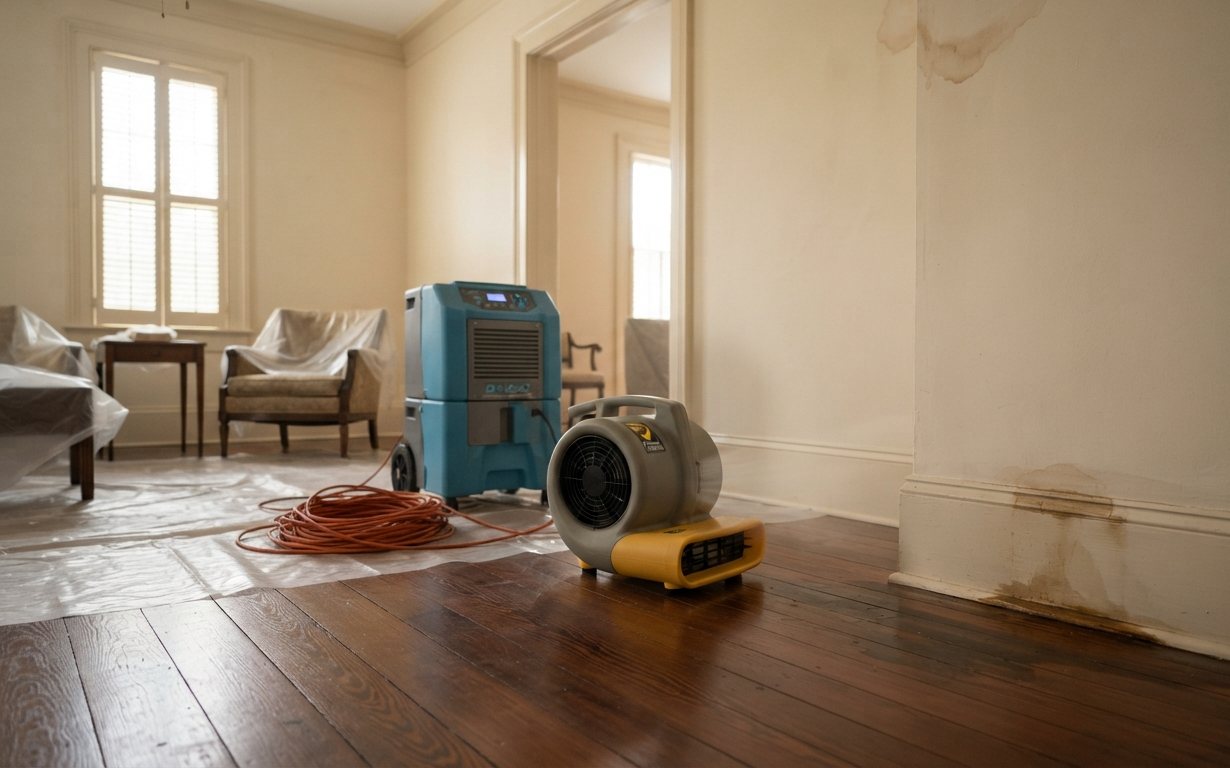
Dry the affected materials and understand what stayed wet long enough to raise mold risk.
Call when water is recent, materials are still damp, or repairs are being considered.
Call (504) 520-4589When Drying Cannot Wait
Water damage restoration fits wet drywall, flooring, cabinets, insulation, or other building materials after a roof leak, plumbing failure, appliance overflow, AC drain problem, or storm.
The immediate goal is to stop active water, remove what can be extracted, and dry the affected assembly before repairs hide damp material behind new finishes.
Water events people call about
- A ceiling or wall wet after heavy rain
- A supply line, water heater, or appliance leak
- An overflowing AC drain pan or condensate line
- Wet cabinets, baseboards, flooring, or insulation
- A room that still feels damp after surface water was removed
How the Drying Response Begins
Stop water and document the event
Identify whether water is still entering, note when the event began, and record which rooms and materials were affected.
Map moisture and dry materials
Visible water is only part of the problem; flooring edges, cabinets, insulation, and wall cavities may hold moisture longer.
Reassess before repairs close the area
Drying progress and material condition should guide whether damaged components, mold inspection, or remediation need attention.
Why This Matters in New Orleans
After New Orleans leaks, storms, or AC drain problems, drying is about more than what feels dry to the touch. Moisture can remain under flooring, behind baseboards, inside cabinets, and in wall assemblies.
Common spoken questions
Questions about water damage and drying
Clear answers to the questions New Orleans property owners often ask before they decide what kind of help fits.
What should I do first after water damage in New Orleans?
Stop the source when it is safe, document the affected rooms and materials, and begin water removal and drying promptly. The early goal is to keep moisture from traveling farther into drywall, flooring, cabinets, insulation, and wall cavities.
How quickly can mold start after a leak?
Mold can begin developing when susceptible materials remain damp, so the useful question is not whether a surface looks dry but whether the full assembly has dried. Prompt extraction, airflow, dehumidification, and moisture checks reduce the time damp materials remain available for growth.
When should wet drywall be removed?
Wet drywall may need removal when it is soft, swollen, deteriorated, contaminated, or preventing the wall cavity from drying. The decision should consider the water source, length of exposure, moisture readings, and what is behind the wall.
Does water damage restoration include mold remediation?
Not automatically. Water damage restoration owns extraction and drying after the water event, while mold remediation becomes relevant when growth or contaminated materials require containment and controlled cleanup. Some properties need one service; others need a coordinated sequence of both.
Drying Is a Mold Prevention Step
Water damage restoration is not just about removing visible water. It is about drying the materials that can feed mold if they stay damp too long.
In New Orleans, that drying work can be harder because outdoor humidity slows evaporation, AC performance varies, and many homes have layered materials that trap moisture at edges and seams.
A ceiling, cabinet, or floor may look better before it is actually dry enough to stop worrying about hidden dampness.
Water Events That Deserve Faster Attention
The more porous or enclosed the material, the less useful it is to wait and see.
- Roof or ceiling leaks that may have wet insulation.
- Supply line, sink, dishwasher, or toilet leaks under cabinets.
- Wet carpet pad, baseboards, drywall, or subflooring.
- Storm water that entered around doors, windows, or roof lines.
- AC drain overflow or HVAC condensation near walls or closets.
Where Water Damage Crosses Into Mold Concern
Water damage does not automatically mean mold, but it creates the condition mold needs: moisture that remains on a material long enough.
If musty odor appears days later, staining spreads, drywall softens, or trim swells, the question may shift from drying alone to inspection or remediation.
Water first response
First Moves After a Leak or Wet Material
Water damage becomes a mold concern when damp materials stay wet. The early goal is to stop the source, protect safety, remove standing water where practical, and understand what materials absorbed moisture.
Stop the source if safe
Shut off water for plumbing leaks or contain roof water while avoiding electrical or ceiling hazards.
Move wet contents
Pull furniture, boxes, rugs, and stored items away from damp floors, walls, and cabinets.
Do not trust surface dryness alone
Drywall, insulation, cabinet backs, flooring edges, and baseboards can stay damp after the room looks better.
Call before closing it up
Painting, rebuilding, or sealing materials before they are dry can hide the problem instead of solving it.
Not sure where to go next?
Pick the page that matches the problem, not the keyword
Water damage decisions move quickly from extraction and drying into moisture checks and mold prevention. These pages help connect wet materials with inspection, cleanup, and remediation choices.
Call While Materials Are Still Wet
Share when the water event happened, whether the source is stopped, and which floors, walls, cabinets, or insulation are affected.