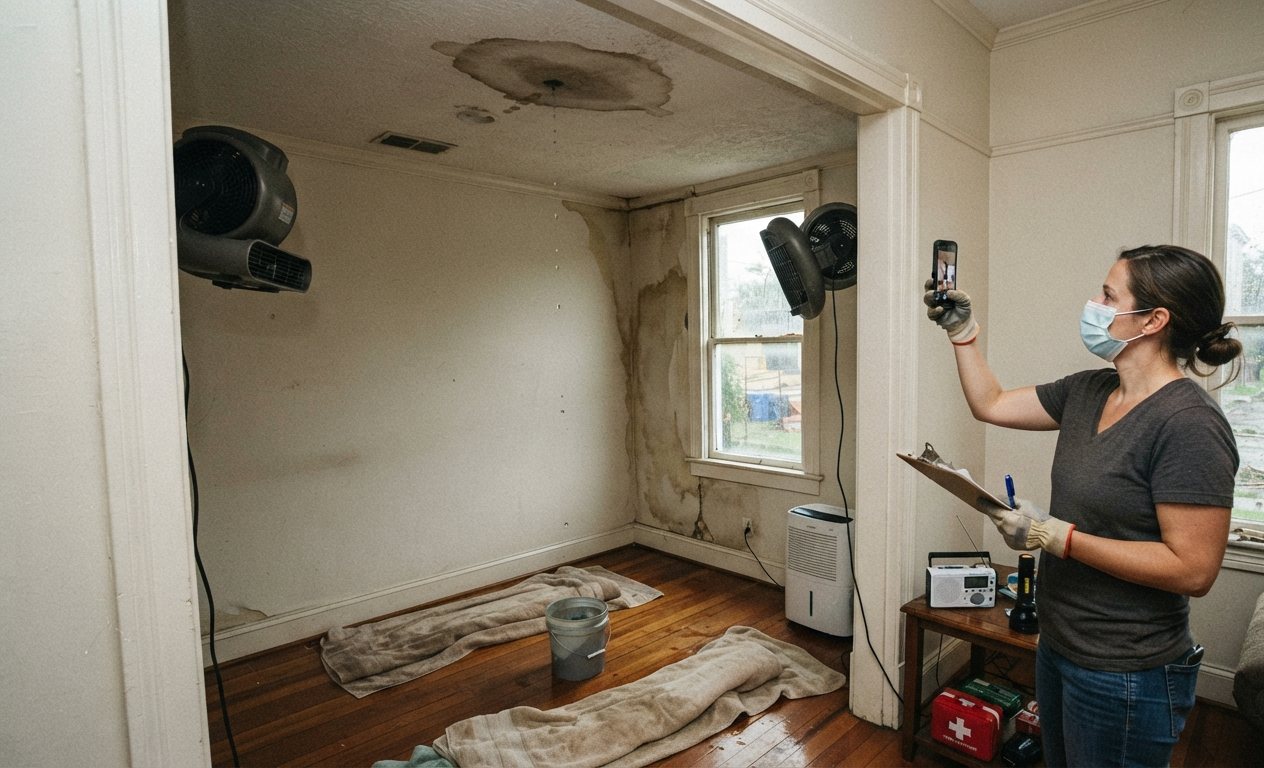
A ceiling stain after hard rain, damp drywall beside a leaking pipe, or cool flooring after storm water entered the building can become a larger repair when moisture stays trapped. For anyone dealing with mold after a water leak in New Orleans, the first 48 hours are less about naming a mold species and more about stopping the water, making the area safe, documenting the damage, and drying materials thoroughly. New Orleans rain, roof damage, crawl spaces, and HVAC condensation can complicate drying because surfaces may look dry while hidden cavities remain wet.
Quick Answer
- Stop the active leak or water entry only when it is safe.
- Stay out of areas with electrical, structural, sewage, or floodwater hazards.
- Photograph the water path, standing water, damaged materials, and discarded items.
- Begin extraction and drying as quickly as conditions safely allow; EPA guidance uses 24–48 hours as the key response window for many clean-water events.
- Check behind drywall, under flooring, inside cabinets, and around insulation.
- Treat drying, inspection, testing, and reconstruction as separate decisions.
The First Priority Is the Water, Not the Mold Test
Stop continuing water intrusion and determine whether the area is safe to enter. A mold sample cannot stop a leak or dry insulation.
Stop or isolate the active water source
Shut off a leaking fixture, appliance supply, or building water line when it is safely accessible. For roof damage, use safe temporary protection rather than climbing onto a wet roof.
Avoid electrical and structural hazards
Do not enter if water is near energized equipment, outlets, a service panel, sagging ceilings, unstable flooring, or damaged framing. Flood guidance recommends delaying reentry until electrical, structural, and other hazards have been addressed.
Record what happened before materials are removed
Take wide room photographs, then closer images of stains, water lines, wet contents, and the likely entry point. NOLA Ready advises documenting damaged property, structural damage, standing-water levels, and discarded items.
Separate emergency drying from later repairs
Extraction and controlled drying should come before cosmetic rebuilding. Closing a wall too early can trap moisture.
A Practical First-48-Hours Timeline
The 48-hour mark is a response target, not an exact mold-growth countdown. EPA says drying within 24–48 hours prevents mold growth in most cases, although timing varies.
The first few hours
Stop the source, restrict access, photograph damage, move dry belongings away, and extract water when it is known to be clean and electricity is safe. EPA cautions against using fans before determining that water is sanitary.
The first day
Check adjacent rooms, baseboards, cabinet bases, flooring edges, and spaces above or below the leak. Renters should notify the landlord or property manager promptly in writing; Louisiana Department of Health recommends text or email.
The second day
Recheck moisture instead of assuming a lighter stain means the area is dry. Decide what can remain and what needs opening or removal.
What changes when drying cannot begin immediately
If access or power loss delayed drying, inspect hidden insulation, padding, engineered wood, and wall cavities. These layers may remain damp after standing water is gone.
Identify What Kind of Water Event Happened
The source affects safety and salvage decisions. Supply-pipe water is not handled like sewage, drain backup, or floodwater.
Roof and flashing leaks
Look near roof valleys, penetrations, vents, and exterior-wall junctions. After a ceiling leak, it may also be necessary to check the attic for roof-related mold clues.
Plumbing supply leaks
A pressurized leak can soak a wall cavity while leaving a small puddle. Inspect both wall sides, nearby cabinets, and the level below.
Drain, toilet, or sewage-related water
Avoid direct contact and clean-water drying assumptions. Contaminated-water work may require protective equipment, containment, and experienced cleanup.
Appliance and water-heater leaks
Appliances and water heaters can send water under cabinets or flooring, creating a hidden wet footprint larger than the puddle.
Wind-driven rain
Wind can force rain around roof edges, windows, doors, and damaged exterior materials. Water may follow framing before appearing indoors.
Flood and storm water
Keep people away until entry is safe and assume possible contamination. New Orleans flooding can result from hurricanes, thunderstorms, storm surge, or infrastructure failures, so the source must be identified rather than guessed.
What Happens to Common Building Materials
Materials dry at different rates. Porous products hold water internally, while some wood and hard surfaces may be salvageable.
Drywall and paper facing
After clean-water exposure, drywall may dry in place if it has no swelling and intact seams. Swollen, crumbling, moldy, contaminated, or cavity-blocking drywall may require removal.
Fiberglass and cellulose insulation
EPA recommends discarding and replacing wet fiberglass and cellulose insulation, which may stay damp behind dry-feeling drywall.
Plaster in older New Orleans homes
Plaster may remain sound, but water can affect lath, framing, paint, or insulation behind it. Cracking, softness, or detachment needs assessment before patching.
Wood framing and subfloors
Wood often can be dried, but check joints, material depth, and the subfloor below finished flooring.
Cabinets and engineered wood
Composite cabinets may swell at the base; toe-kick spaces and sink bases are common hidden wet areas.
Carpet, padding, and upholstered materials
Extraction and dehumidification may help after clean-water exposure, but padding and upholstery can be difficult to dry. Floodwater makes salvage less likely.
Signs the Area Did Not Dry Completely
Returning stains, odor, swelling, or condensation can indicate retained moisture or an unresolved source.
A stain continues to change
A mark that darkens after rain, AC use, or plumbing activity is useful evidence. Photograph it with dates.
Paint begins to bubble or peel
Bubbling paint can point to moisture behind the coating. A fresh coat of paint will not solve it.
The room develops a musty odor
A returning odor may come from damp paper facing, insulation, cabinets, flooring, or a cavity. If the visible water is gone but the odor remains, track when and where the musty smell returns.
Materials feel swollen, soft, or cool
Swollen trim, soft drywall, cupped flooring, or cool surfaces may indicate retained moisture.
Condensation returns after the visible water is gone
Moisture around ducts, pipes, or an air handler may be an HVAC or insulation problem. The source still has to be addressed.
Drying, Mold Cleanup, Remediation, and Restoration Are Separate Decisions
Drying removes water; cleanup addresses surfaces; remediation manages broader or hidden mold; restoration rebuilds removed finishes.
Drying removes moisture
Drying may require extraction, dehumidification, cavity access, and repeated moisture checks. Equipment does not prove every layer is dry.
Cleanup addresses affected surfaces
Cleanup may suit limited growth on materials that can be cleaned and dried fully. Painting over visible growth is not cleanup.
Remediation controls a larger or hidden mold condition
Remediation may include containment, protective measures, porous-material removal, hidden-area access, and moisture correction. Once drying is underway, use the difference between removal and remediation to understand the next scope of work.
Restoration repairs what had to be opened or removed
Restoration may replace drywall, trim, insulation, cabinets, or flooring after the source is corrected and retained materials are ready to close.
When Materials May Need to Be Opened or Removed
Opening or removal is more likely when moisture is trapped, materials are damaged, water is contaminated, or dryness cannot be verified.
Wet insulation behind apparently dry drywall
Dry paint does not prove hidden insulation is dry. A limited opening may reveal a larger wet area.
Water trapped beneath flooring
Water can move beneath vinyl, laminate, tile underlayment, and wood flooring, causing odor, swelling, adhesive failure, or subfloor damage.
Cabinets that stayed wet at the base
Particleboard often swells after prolonged wetting. A toe kick may need removal to reach the wall and floor.
Wall cavities with limited airflow
Closed, insulated cavities dry slowly. Moisture readings and selective openings are more useful than appearance alone.
Materials affected by contaminated water
Evaluate porous materials exposed to sewage or floodwater conservatively and use appropriate safety measures.
When an Inspection or Testing May Be Useful
Inspection helps when source, extent, or dryness is uncertain; testing helps only when it answers a defined question. Louisiana guidance notes that seeing or smelling mold often does not require species identification and that Louisiana has no set airborne mold concentration standards.
The affected area is hidden
An inspection can connect odor, staining, readings, and leak history to concealed areas.
The odor continues after drying
Persistent odor may mean material stayed wet, a cavity was missed, or the source remains active.
Multiple areas were exposed
A roof opening, overflowing fixture, or storm can affect several rooms. Map the water path.
Documentation or post-cleanup verification is needed
Sampling may support a written protocol, property transaction, managed-building process, or agreed completion plan. The decision should follow the question being asked, as explained in inspection versus testing after water damage.
Documentation for Owners, Renters, and Property Managers
Documentation should show the source, water path, completed work, and materials left in place.
Photograph the original water path
Capture the source, stains, spread, adjacent rooms, standing water, and relevant exterior conditions.
Keep a timeline of calls and repairs
Record discovery, shutoff, access, drying, and repair times.
Record which materials were wet or discarded
List wet drywall, insulation, carpet, cabinets, flooring, and contents; photograph discarded items when safe.
Keep estimates and drying records together
Store readings, equipment logs, photographs, invoices, and scopes together. Detailed drying records also make it easier to understand what changes a remediation estimate.
Understand that coverage decisions belong to the insurer and policy documents
Coverage may depend on cause, policy wording, exclusions, limits, mitigation, and insurer review. Review the policy and speak with the insurer or a qualified insurance professional.
Questions to Ask Before Reconstruction Begins
Do not close walls, replace flooring, or reinstall cabinets before the source and drying work are addressed.
Has the water source been repaired?
Drying cannot compensate for a continuing roof, plumbing, drainage, or condensation problem.
How was hidden moisture checked?
Ask which cavities, insulation, subfloors, cabinet bases, and adjacent rooms were checked.
Which materials remain in place?
The scope should identify what was dried, cleaned, removed, replaced, or monitored.
Who is responsible for rebuilding?
Clarify whether remediation and reconstruction are one contract or separate scopes.
What confirms the area is ready to close?
The decision should consider source repair, dryness, visible condition, cleanliness, and agreed verification. Before signing a scope, use this checklist to evaluate a New Orleans mold contractor.
What Trusted Public Health and Cleanup Guidance Emphasizes
- Correct the leak or moisture source instead of repeatedly cleaning the same spot.
- Dry wet materials quickly and completely; 24–48 hours is the key response window for many clean-water situations.
- Use suitable gloves, eye protection, and respiratory protection when disturbing moldy material.
- Do not use clean-water methods or fans until sewage, floodwater, or other contamination concerns are evaluated.
- Remove visible mold rather than simply covering it with paint.
- Seek qualified help when conditions are extensive, hidden, contaminated, structurally unsafe, or beyond available equipment and experience.
Frequently Asked Questions
How quickly can mold grow after a roof leak?
There is no universal countdown, but EPA uses 24–48 hours as the critical drying window. Porous materials, hidden cavities, and delayed access make drying harder.
Does wet drywall always have to be removed?
No. Clean-water-damaged drywall may dry in place if it is not swollen and its seams remain intact. Damaged, contaminated, or moldy drywall may need removal.
Can drywall feel dry while insulation is still wet?
Yes. Drywall facing can feel dry while insulation or framing behind it remains wet. Selective access and moisture checks may be needed.
Should the AC run during water-damage cleanup?
Only when electrical and HVAC systems are safe and operation will not spread contamination. A wet or mold-affected air handler or duct system should be evaluated first.
When does water damage become a mold-remediation project?
It becomes a remediation issue when visible growth, persistent odor, hidden contamination, or prolonged dampness requires controlled removal and cleaning. The moisture source must still be corrected.
Editorial Trust Note
Make the area safe, stop the water, document damage, dry what can be dried, and inspect what may still be wet. Mold color or one test does not replace a moisture investigation. This article provides general information only and is not medical, legal, insurance, engineering, or policy-coverage advice. Property conditions and safe cleanup boundaries vary.
Discuss the Affected Area
If a New Orleans home, rental, managed property, or small business has wet drywall, changing stains, odor, or visible mold after a leak or storm, arrange an assessment of the affected areas before reconstruction begins.