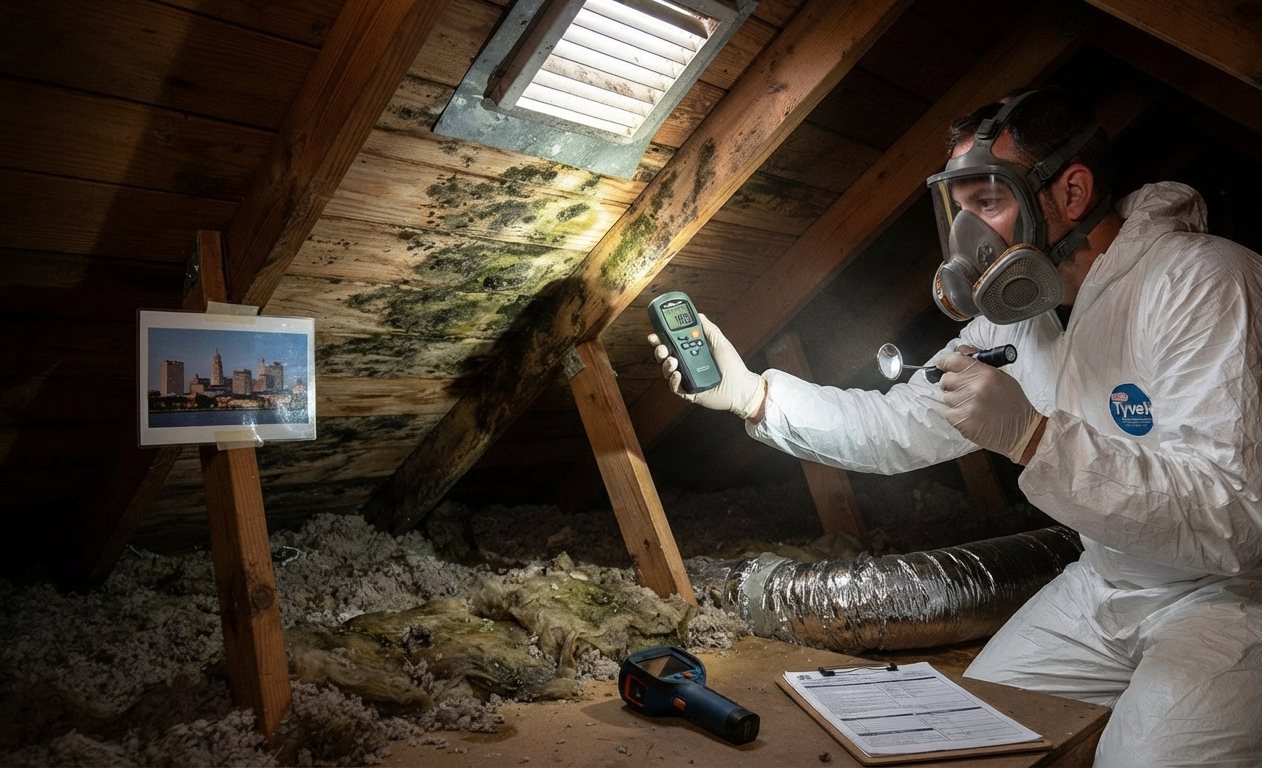
A ceiling stain that darkens after heavy rain, a musty odor near an upstairs hallway, or black spots on attic rafters can all point to unwanted moisture. When homeowners ask what causes attic mold in New Orleans homes, the answer is rarely humidity alone. Roof details, wind-driven rain, HVAC condensation, air leakage, exhaust ducts, and insulation can all play a role.
Quick Answer
- Attic mold develops when roof decking, rafters, insulation, or dusty surfaces remain damp.
- Common New Orleans sources include roof leaks, storm-driven rain, sweating ducts, and exhaust vents that release moisture into the attic.
- Dark staining does not prove that moisture is still active; compare dated photos and inspect around the next rain event.
- Repair the water or condensation source before cleaning, coating, or replacing materials.
- Do not walk on ceiling drywall or disturb insulation around damaged wiring or weak framing.
- Visible growth does not automatically mean laboratory testing is necessary.
Why Attic Mold Is Usually a Moisture Clue
Attic mold shows that a surface became damp, but it does not explain how the moisture arrived. The real task is connecting the growth to a roof defect, condensation, air leakage, an exhaust problem, or an older water event.
Mold Does Not Identify the Original Water Source
Water can travel along roof decking and framing before reaching insulation, so mold or staining may appear several feet from the actual leak. Condensation can also form on a cold duct or pipe and drip onto materials below it.
This is why cleaning the darkest area first is not always the right starting point. The moisture path has to be traced across the roof deck, framing, insulation, HVAC components, and ceiling surfaces beneath the attic.
Old Staining and Active Dampness Are Different Conditions
A dark rafter may remain discolored long after a successful roof repair. An active problem is more likely when the mark grows, changes after rain, feels damp, or is surrounded by wet insulation and softened materials.
Dated photographs and properly interpreted moisture readings are more useful than color alone. A stain that has not changed through several rain events may be historical, while a small mark that repeatedly becomes wet needs further investigation.
Common Causes of Attic Mold in New Orleans
The leading causes of attic mold are water entering through the roof and condensation forming where warm, humid air meets a colder surface. In New Orleans, heavy rain, tropical weather, prolonged AC use, and older roof details can make the source difficult to identify from the rooms below.
Roof Leaks Around Flashing and Penetrations
Chimneys, plumbing vents, skylights, dormers, and roof-to-wall intersections interrupt the roof surface. Damaged roofing, displaced flashing, failed sealant, or deteriorated vent boots can allow water into the attic.
The stain may not sit directly beneath the damaged roof component because water can follow the decking or a rafter before dripping. If the leak is recent, first respond to wet materials after a roof leak before focusing only on the visible mold or discoloration.
Wind-Driven Rain Beneath Roofing Materials
During strong thunderstorms or tropical weather, wind can push rain beneath loose shingles, damaged roof edges, or open joints. Some leaks appear only when the rain arrives from a particular direction.
That explains why an attic may remain dry during one storm but show fresh staining after another. When the problem is intermittent, inspecting shortly after the conditions that trigger it can reveal more than checking during several dry days.
Condensation on Ducts and Mechanical Equipment
Cold ducts, refrigerant lines, air handlers, and metal fittings can sweat when their insulation is missing, wet, compressed, or poorly sealed. The resulting water can drip onto attic insulation, framing, or ceiling drywall.
Look for damp insulation below equipment, rusty metal, damaged duct jackets, or stains that become more noticeable during periods of heavy AC use. A pattern linked to cooling-system operation may point toward condensation rather than a roof leak.
Warm Indoor Air Leaking Into the Attic
Gaps around wiring, plumbing, light fixtures, ceiling penetrations, and attic hatches can allow air and moisture to move between occupied rooms and the attic. When that air reaches colder surfaces, condensation may occur.
Air sealing may help in a conventional vented attic, but the work must fit the home’s existing insulation, ventilation, and HVAC design. Chimneys, flues, recessed lights, and electrical components also require appropriate clearances and materials.
Bathroom or Dryer Exhaust Terminating in the Attic
Bathroom fans and clothes dryers should release moist air outdoors. A disconnected, damaged, or improperly routed exhaust duct can deliver moisture directly to roof decking and insulation.
Sometimes the fan appears to work normally from inside the room even though the duct has separated in the attic. Concentrated staining near the end of a duct, damp insulation, or moisture on nearby framing can reveal the problem.
Limited or Blocked Attic Ventilation
In a conventional vented attic, blocked soffits, insulation covering airflow paths, or obstructed roof vents may contribute to damp conditions. However, adding more vents is not automatically the solution.
Some attics are intentionally sealed or conditioned. Any ventilation change should be compatible with the home’s roof assembly, insulation, HVAC location, and air-control strategy.
Warning Signs You May Notice From the Living Space
Attic moisture often creates clues downstairs before anyone opens the attic hatch. The location and timing of those clues can help separate rain-related water intrusion from condensation connected to AC use.
Ceiling Stains After Rain
A ceiling stain that enlarges, darkens, or feels damp after rain suggests active water entry. The source may be a roof penetration, valley, flashing detail, or damaged roofing higher up the slope.
Do not assume the roof defect sits directly above the visible stain. Water may travel along wood framing or the back of the ceiling material before it becomes visible inside the room.
A Musty Odor Near an Upstairs Ceiling
An odor near an attic hatch, ceiling register, or top-floor closet may be moving from the attic. It could also originate inside a wall cavity, duct connection, or nearby HVAC component.
Before assuming the smell begins overhead, trace a musty smell through the house and note whether it becomes stronger after rain, during AC operation, or after the home has remained closed.
Peeling Paint Around Ceiling Edges
Bubbling, peeling, or softened paint can indicate damp material behind the finish, especially when it appears beside a recurring stain or below wet insulation. The paint itself is not the source of the problem.
Painting over the area may hide the evidence temporarily, but it will not dry wet drywall, repair a roof leak, or stop condensation.
Repeated Discoloration Near Vents
Marks around a supply register may come from condensation, dust collecting where air leaks around the vent, or damp surrounding material. The duct connection, insulation, and nearby ceiling should all be examined.
A ring that repeatedly returns after cleaning is more significant than a one-time dusty mark.
Higher Humidity in Rooms Below the Attic
A damp-feeling upper floor may involve air leakage, HVAC performance, roof moisture, or damp insulation. Indoor humidity can also rise when the AC system cools the home without removing enough moisture.
A portable dehumidifier may reduce the immediate humidity level, but it does not confirm that the underlying attic or HVAC condition has been corrected.
What to Look for Inside the Attic
A useful attic inspection looks for patterns: what is wet, what sits above it, and where water could have traveled. A quick glance at one dark section of wood is rarely enough to explain the complete moisture story.
Dark or Fuzzy Areas on Roof Decking
Visible growth may appear spotty, streaked, powdery, or fuzzy. Black spots on attic rafters do not automatically identify a particular mold species or indicate how serious the condition is.
Instead, look at whether the affected area follows a roof plane, duct, exhaust outlet, plumbing vent, or known leak. The surrounding materials often provide more useful information than the color.
Water Marks Around Nails, Valleys, and Flashing
Dark rings around fasteners and streaks below valleys, chimneys, or vent pipes can suggest roof-related water entry. Water may follow the underside of the decking before reaching a place where it can drip.
Nearby framing bays and insulation should also be checked. The first visible stain may not mark the beginning of the leak.
Damp Insulation
Wet insulation may clump, compress, discolor, or feel heavier than the surrounding material. It can conceal damp ceiling drywall or framing below it.
A dry-looking roof deck does not rule out moisture lower in the assembly. Insulation may hold water after the surface above has already dried.
Sweating Ducts or Uninsulated Pipes
Look for water beads, damaged outer jackets, rust, and drip marks beneath cold components. Attic condensation mold is more likely where humid attic air repeatedly reaches exposed metal or a poorly insulated cold surface.
Replacing wet insulation around the duct may not solve the problem if air leaks, damaged seals, or HVAC conditions continue to create condensation.
Rust, Rot, or Softened Wood
Rusty fasteners and corroded metal can indicate repeated wetting. Wood that feels soft or appears cracked, sagging, or decayed may have more than a surface mold issue.
Structural deterioration requires a separate repair decision. Mold cleanup alone does not restore the strength of damaged wood.
Daylight or Damaged Roofing Visible From Inside
Unexpected daylight, torn underlayment, displaced decking, or obvious storm damage deserves further roof assessment. Missing or shifted roofing materials may be especially relevant after strong wind.
Do not climb onto a wet, steep, or damaged roof simply to confirm what you observed from the attic.
How to Tell Whether a Stain May Still Be Active
An active stain changes over time or tests damp under the conditions that trigger it. Appearance alone cannot reliably separate an old roof leak from a current one.
Inspecting During or Soon After Rain
A safe check during or shortly after rainfall may reveal fresh dampness, a wet fastener, or a developing drip path. This timing can be particularly useful for leaks that disappear during dry weather.
Only inspect from a stable and accessible location. Poor visibility, strong wind, electrical concerns, or weak materials are reasons to stop rather than push farther into the attic.
Comparing Photographs Over Time
Photograph the same area from the same angle and include a date and recognizable reference point. A widening edge, new streak, or change in nearby insulation is easier to identify from consistent photos.
This approach is more reliable than trying to remember whether a stain looked smaller several weeks earlier.
Checking Adjacent Insulation and Framing
Follow the suspected moisture path above, below, and sideways. Damp insulation, a wet ceiling joist, or staining on the back of drywall may show that the visible mark is only one part of the affected area.
A roof leak can cross framing bays, while condensation may appear in a line beneath a duct or pipe.
Using Moisture Measurements Rather Than Color Alone
A moisture meter can support an inspection when it is suitable for the material and interpreted correctly. It can help compare a suspected area with nearby materials that appear unaffected.
One low reading during a dry afternoon does not necessarily rule out an intermittent leak or condensation problem. Measurements should be considered alongside weather, AC use, visual changes, and material condition.
Attic Mold Inspection and Safety Boundaries
Attics combine fall, electrical, heat, respiratory, and structural hazards. Homeowners may be able to document visible clues from a stable access point, but a difficult or unfamiliar attic should not be explored casually.
Limited Access and Fall Hazards
Ceiling drywall is not a walking surface. Narrow joists, loose insulation, low rooflines, stored belongings, and poor lighting make falls and ceiling damage easy.
Only step on secure structural framing when it can be clearly identified. If the framing is hidden beneath insulation or access is restricted, stop at the hatch.
Electrical Wiring and Weak Ceiling Surfaces
Do not touch wet wiring, damaged fixtures, corroded equipment, or standing water near electrical components. Moisture around electrical systems may require evaluation before other work continues.
Sagging decking, cracked rafters, soft ceiling areas, or damaged framing may also need attention from the appropriate building trade.
Disturbing Insulation and Contaminated Materials
Moving insulation, brushing visible growth, or directing a fan across an affected area can release dust and particles. People with sensitivities or respiratory concerns may want to avoid disturbing visible mold.
Do not mix household cleaning products or apply chemicals to unknown materials in a poorly ventilated attic. Personal health concerns should be discussed with a qualified healthcare professional.
When the Attic Should Be Assessed Professionally
Qualified assessment makes sense when access is unsafe, the moisture source is unclear, visible growth is extensive, wet insulation or hidden cavities are involved, structural damage is suspected, or the work could affect occupied rooms.
Before approving a scope of work, use these questions to ask an attic mold contractor to clarify the source, affected materials, access method, drying plan, and repair responsibilities.
What Attic Mold Remediation May Involve
Attic mold remediation addresses affected growth or materials while correcting the condition that allowed the problem to develop. The final scope depends on the moisture source, surface types, access, and connection between the attic and occupied rooms.
Repairing the Roof or Condensation Source First
The roof defect, failed condensate drain, sweating duct, disconnected exhaust, or air leak must be repaired or included in the work plan. Otherwise, cleaned materials can become damp again.
That is usually the real issue. Mold cleanup without moisture correction may improve the appearance without preventing recurrence.
Defining the Affected Wood and Insulation
The inspection should map visible growth and review nearby roof decking, rafters, joists, insulation, penetrations, and mechanical equipment. It should also distinguish surface discoloration from materials that remain wet, decayed, or otherwise damaged.
The visible area may not represent the full work area if water has traveled behind insulation or along framing.
Containment When the Work Can Affect Occupied Rooms
Containment and air-control decisions depend on how debris, tools, and workers will move through the property. An attic reached through a bedroom closet creates different concerns from one with exterior access.
Occupied rooms may need protection from dust and debris during removal or cleaning. The plan should explain access, material movement, and cleanup of the route.
Removing Insulation That Cannot Be Dried or Cleaned
Insulation that remains wet, is heavily affected, or prevents access to damaged material may need to be removed. Materials that have compressed or deteriorated may also no longer perform as intended.
Replacement should be coordinated with roof repair, drying, air sealing, and the intended attic design rather than treated as an isolated final step.
Cleaning and Drying Structural Wood
Sound structural wood may sometimes be cleaned and dried rather than replaced. The appropriate method depends on surface condition, accessibility, and the extent of the growth.
Soft, rotten, delaminated, or structurally weakened wood may require repair or replacement beyond the mold-remediation work.
Deciding Whether Verification Is Needed
Completion is often evaluated through a detailed visual review, dry materials, corrected moisture conditions, and the absence of remaining debris or mold-related odor. Visible growth does not automatically require sampling, so review when mold testing adds useful information.
Testing is more useful when it answers a defined question rather than being added automatically to every attic project.
Prevention After the Cleanup
Preventing attic mold means maintaining the roof, controlling condensation, routing moisture outdoors, and preserving the attic’s intended ventilation, insulation, and air-control system. A coating or fresh paint cannot replace those steps.
Roof and Flashing Inspections
Review roof coverings, penetrations, flashing, valleys, eaves, gutters, and visible attic conditions after major weather. Look for displaced roofing, new stains, damp insulation, and signs that water has followed framing.
Keeping dated photographs of recurring locations makes future comparisons easier.
Properly Routed Exhaust Vents
Confirm that bathroom and dryer exhaust ducts remain connected and discharge outdoors. A fan that operates normally from inside the room may still release moisture into the attic if the duct has separated.
Flexible ducts should also be checked for crushing, sagging, damage, and loose connections.
Duct Insulation and Condensate Management
Repair damaged duct insulation, maintain drain pans and condensate lines, and investigate recurring sweating. The goal is to determine why condensation forms, not simply remove the water beneath the equipment.
Wet or damaged insulation around HVAC components should not be replaced until the cause has been addressed.
Air Sealing Between the Home and Attic
In a conventional vented attic, gaps at hatches and ceiling penetrations can allow air and moisture to move upward. Air sealing should be coordinated with insulation and completed safely around lights, chimneys, wiring, and flues.
The correct approach may differ in an attic that is designed to be sealed or conditioned.
Seasonal Checks After Major Storms
A short visual review after severe rain or wind can reveal fresh staining, shifted insulation, roof debris, or a disconnected duct before the condition becomes more extensive.
Property managers can improve follow-up by keeping dated photographs, tenant reports, roof repairs, HVAC service notes, and moisture observations organized by unit or building area.
Practical Attic Mold and Moisture Guidance
- Find and correct the water or condensation source before treating the visible growth.
- Dry wet building materials as soon as conditions safely allow.
- Remove materials that cannot be adequately cleaned and dried rather than covering the damage.
- Use appropriate eye, skin, and respiratory protection when disturbing affected materials.
- Do not mix cleaning chemicals or direct fans across established mold growth.
- Use testing to answer a defined question; visible mold does not automatically require sampling.
Frequently Asked Questions
Is Black Staining on Attic Wood Always Mold?
No. Dark staining may come from mold, an old leak, dirt, oxidation, or another material change. Evaluate the moisture pattern and condition of the wood rather than relying on color alone.
Can Attic Mold Cause a Musty Smell Downstairs?
Yes, an attic condition can contribute to odors below, especially near hatches, ducts, and ceiling penetrations. The smell may also come from a wall cavity or HVAC component, so its timing and location should be traced.
Does Attic Mold Mean the Roof Must Be Replaced?
Not necessarily. A flashing defect, damaged vent boot, condensation problem, or disconnected exhaust may be repairable without replacing the entire roof. Widespread deterioration or damaged decking requires a separate roofing assessment.
Can Moldy Attic Wood Be Cleaned?
Sound structural wood may sometimes be cleaned and thoroughly dried. Soft, rotten, delaminated, or structurally weakened wood may require repair or replacement beyond the mold cleanup.
Is Testing Necessary for Visible Attic Mold?
Usually not simply to prove that visible growth exists. Testing may help answer a specific hidden-condition, documentation, or post-remediation question, but it does not replace inspection and moisture-source correction.
Editorial Trust Note
Attic staining should be treated as a building-moisture question before it becomes a color or species question. Safe access, roof condition, condensation, insulation, and the rooms below all affect the appropriate next step. This article provides general property-care information and is not medical, engineering, insurance, or product-safety advice. If you have health concerns, consult a qualified healthcare professional.
Discuss an Attic Mold or Moisture Concern
If you have noticed persistent staining, damp insulation, a musty odor, or visible mold in the attic of a New Orleans property, call New Orleans Mold Fix at (504) 520-4589 to discuss the affected area and practical next steps.