Odor, staining, soft material, hidden moisture, or a concern you cannot locate.
Mold Inspection in New Orleans When the Source Is Unclear
Inspection helps identify likely moisture paths, visible clues, hidden-risk areas, and whether testing, removal, remediation, or drying should come next.
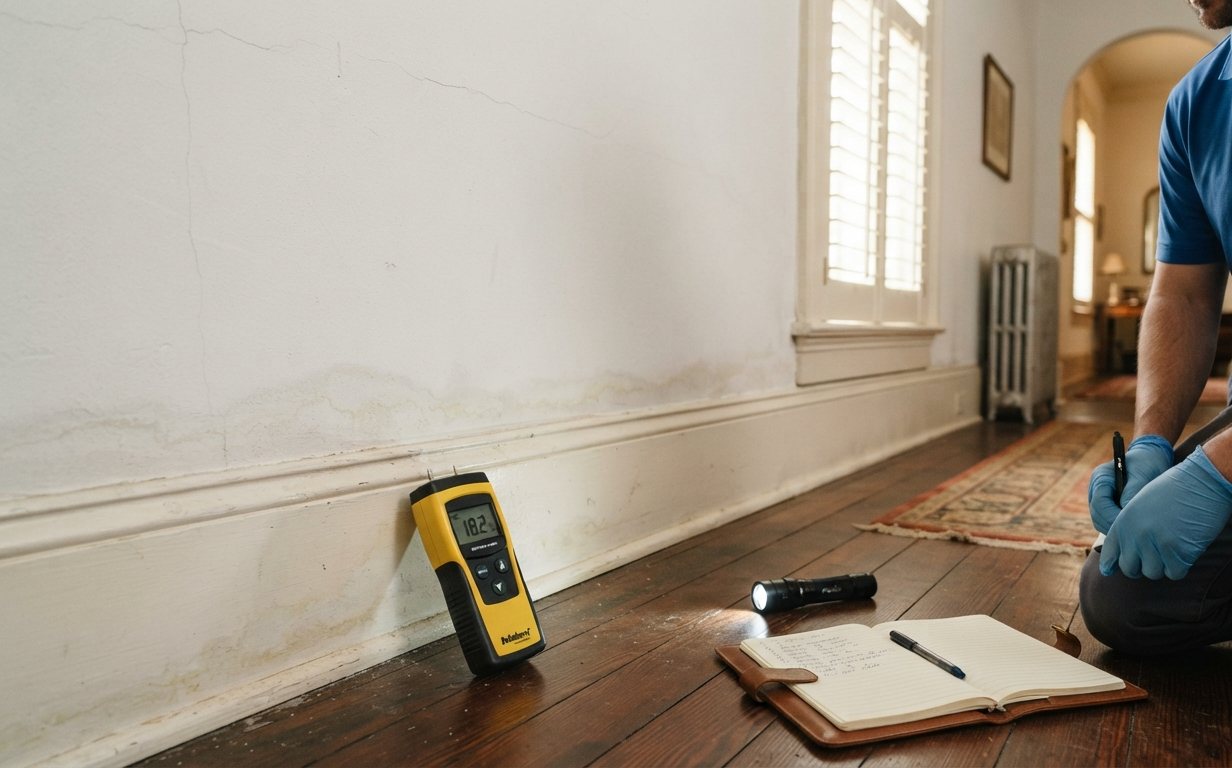
Trace where moisture may be entering or collecting before choosing cleanup or testing.
Call when you need the problem identified before deciding what work makes sense.
Call (504) 520-4589When Inspection Is the Better First Step
Choose inspection when a musty odor, recurring stain, soft material, or damp room suggests a problem but the location and moisture source are still unclear.
The goal is to trace patterns before anyone samples at random, opens unnecessary walls, or treats a visible mark without understanding why it appeared.
Clues worth investigating
- An odor that is strongest in one room or after the door stays closed
- A ceiling stain that changes after rain
- Soft drywall, swollen trim, or peeling paint without an obvious leak
- A tenant report with no visible source
- Recurring condensation near an AC closet, vent, or exterior wall
How an Inspection Question Is Narrowed Down
Reconstruct the timeline
Describe when the odor or stain began, what weather or plumbing event came first, and whether the area was repaired before.
Trace moisture clues
Room location, material changes, roof history, HVAC operation, and adjacent spaces help identify likely moisture paths.
Define the next decision
The findings may point toward drying, visible removal, remediation, or targeted testing when a sample would answer a real question.
Why This Matters in New Orleans
For New Orleans inspections, the useful question is rarely just whether a stain exists. Older plaster, humid wall cavities, crawl-space air, roof history, and AC condensation all help explain where moisture may be moving.
Common spoken questions
Questions about mold inspection
Clear answers to the questions New Orleans property owners often ask before they decide what kind of help fits.
When should I get a mold inspection in New Orleans?
Choose a mold inspection when you notice a musty odor, unexplained staining, recurring dampness, or changes after a leak but cannot tell where the problem begins. The inspection should connect the clue you can see or smell to a likely moisture path.
Can a mold inspection find mold behind drywall?
An inspection can identify moisture patterns, material changes, odor clues, and locations that deserve closer evaluation, but no tool can see perfectly through every wall. Limited access or further investigation may be recommended when evidence points to a concealed cavity.
Does a mold inspection always include testing?
No. Inspection looks at the property conditions and moisture story, while testing collects air or surface samples for a defined purpose. Sampling should be added only when the result will answer a useful question or change the next decision.
What should I mention when I call about a mold inspection?
Mention the room, when the odor or stain appears, recent leaks or storms, HVAC behavior, and whether materials feel damp, soft, or swollen. Those details help focus the inspection on the most likely moisture routes.
Inspection Is for Clues, Patterns, and Source Tracing
Mold inspection is most useful when something feels wrong but the next step is not obvious. A room smells musty, a stain appears after rain, a closet feels damp, or a tenant reports an odor with no clear visible growth.
The inspection question is not simply "Is there mold?" It is "What condition is creating this concern, what material may be affected, and what should happen next?"
In older New Orleans homes, previous repairs, layered wall materials, and patched ceilings can make that question harder than it looks.
Clues Worth Mentioning During an Inspection Call
Small details can shorten the path to the right area of concern.
- The odor is strongest in one room, cabinet, closet, or near one vent.
- The stain changes after rain or after an upstairs fixture is used.
- Baseboards, drywall, or cabinet panels feel swollen or soft.
- The room feels damp even when the rest of the home feels normal.
- The problem started after a storm, roof repair, plumbing leak, or AC issue.
Why Inspection and Testing Should Not Be Blurred Together
Testing collects samples. Inspection studies the property condition. Those two services can work together, but they answer different questions.
If the source is unknown, inspection usually gives better first-step information than sampling alone. If documentation is the goal after the site is understood, testing may make sense.
Not sure where to go next?
Pick the page that matches the problem, not the keyword
Inspection is often the first step when the source is unclear. These pages help connect the findings to testing, cleanup, removal, or remediation without treating every moisture concern the same way.
Start With the Clues You Already Have
Call with the room, odor timing, stain location, recent leaks, and anything that feels damp, soft, or swollen.