Unclear air concerns, documentation needs, comparison questions, or post-work verification.
Mold Testing in New Orleans When Sampling May Help
Testing is for sampling and documentation questions. It does not replace inspection, removal, remediation, or fixing moisture sources.
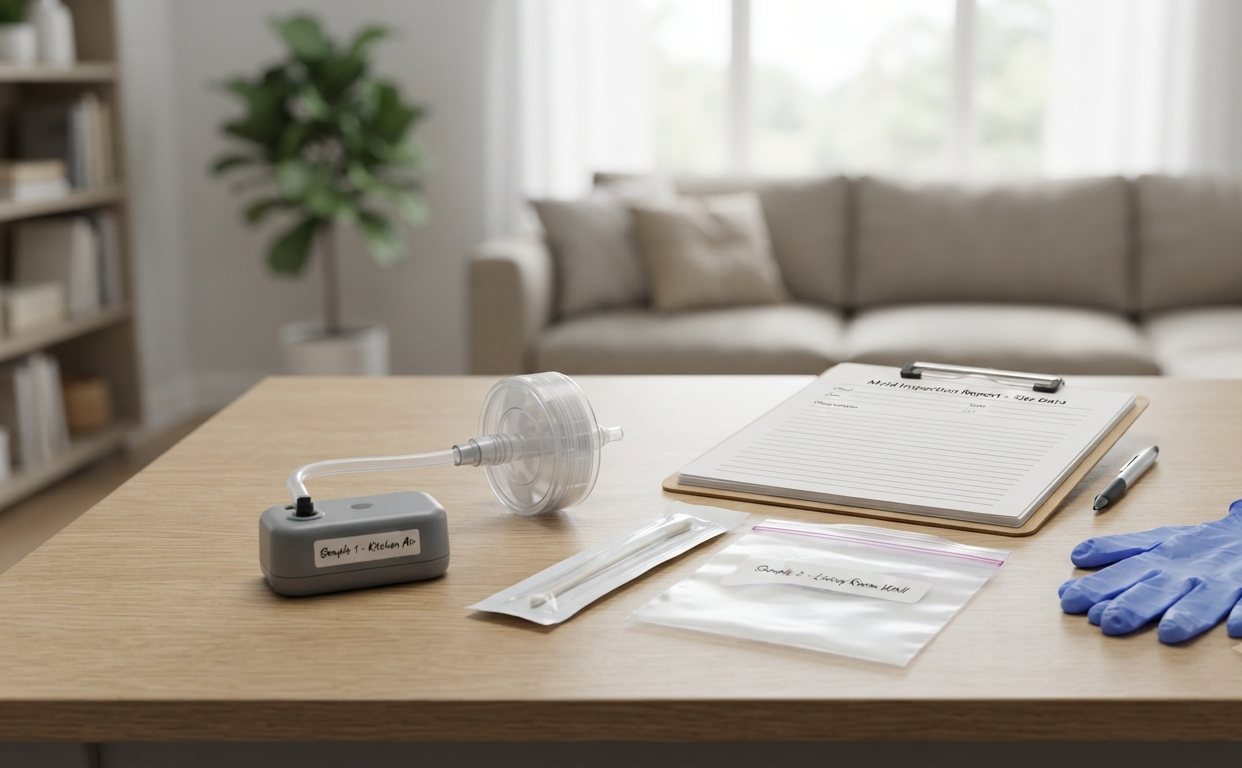
Use testing when sampling will answer a real question, not as a substitute for moisture tracing.
Call when you need help deciding whether sampling is useful for your situation.
Call (504) 520-4589When Sampling Can Answer a Defined Question
Testing is useful when an air or surface sample will support documentation, compare areas, investigate a specific concern, or provide a defined post-work check.
It should not replace moisture tracing. A laboratory result can describe a sample, but it cannot explain a roof leak, wet wall cavity, AC condensation pattern, or damaged material by itself.
Questions testing may help answer
- Is a suspect surface appropriate for targeted sampling?
- Would an indoor and outdoor air comparison add useful context?
- Does a property manager need documented sample results?
- Is a defined post-remediation check part of the work plan?
- Will the result change a real decision about the property?
How a Testing Plan Is Built
Define the question first
Testing should begin with the decision the result is expected to support, not with a generic request to sample every room.
Inspect and choose locations
Moisture history, room use, visible conditions, and comparison areas help determine whether air or surface sampling is meaningful.
Read results in context
Sample findings should be considered alongside the inspection, building materials, moisture source, and limits of the sampling method.
Why This Matters in New Orleans
Testing in a humid New Orleans property should answer a defined question, not replace source tracing. Samples are most useful when they support an inspection finding, document conditions, or compare areas after work.
Common spoken questions
Questions about mold testing
Clear answers to the questions New Orleans property owners often ask before they decide what kind of help fits.
Do I need mold testing if I can already see mold?
Not always. When visible growth and its moisture source are clear, testing may not change the cleanup decision. Testing is more useful when identification, documentation, comparison, or an unclear condition creates a specific question that sampling can answer.
What is the difference between air and surface mold testing?
Air testing samples particles present in the air during a particular collection period, while surface testing samples a selected material or spot. Neither result explains the entire building by itself, so the sample should be interpreted alongside inspection findings and moisture conditions.
Can mold testing find the source of moisture?
No. A test can provide information about the sample collected, but it does not trace a roof leak, plumbing leak, condensation problem, or damp wall cavity. Moisture-source investigation belongs to the inspection and building-condition side of the work.
When is mold testing useful for a rental or managed property?
Testing can be useful when a landlord, tenant, property manager, consultant, or project plan needs a documented answer to a defined sampling question. The purpose should be agreed on first so the results support a real decision instead of creating data without context.
Testing Is Most Useful When It Has a Job
Mold testing should answer a defined question. It may help with documentation, comparison between spaces, surface confirmation, or post-remediation review.
Testing is less useful when someone expects a sample to find a leak, map every hidden cavity, or replace moisture investigation. A lab result can support decisions, but it does not explain the whole building by itself.
The strongest testing conversations begin with purpose: what decision will the result help you make?
Good Reasons to Consider Mold Testing
Testing can be valuable when it is connected to a clear decision.
- A property manager needs documentation after a reported concern.
- A buyer, seller, landlord, or owner needs a clearer record.
- A surface needs confirmation before next-step planning.
- Post-remediation sampling is being considered after cleanup.
- Inspection found conditions where sampling may add useful context.
When Inspection Comes First
If there is active water, visible material damage, or a strong odor with no known source, inspection often comes before testing. Otherwise the test may create more questions than answers.
New Orleans humidity can make air sampling especially context-dependent. HVAC cycles, outdoor conditions, closed rooms, and recent cleaning can all affect what a sample represents at one moment in time.
Not sure where to go next?
Pick the page that matches the problem, not the keyword
Testing is most useful when there is a specific question to answer. These pages help decide whether sampling, inspection, cleanup, or remediation is the better starting point.
Ask Whether Testing Would Answer the Question
Call with the reason for testing, the areas involved, the moisture history, and how the results would be used.