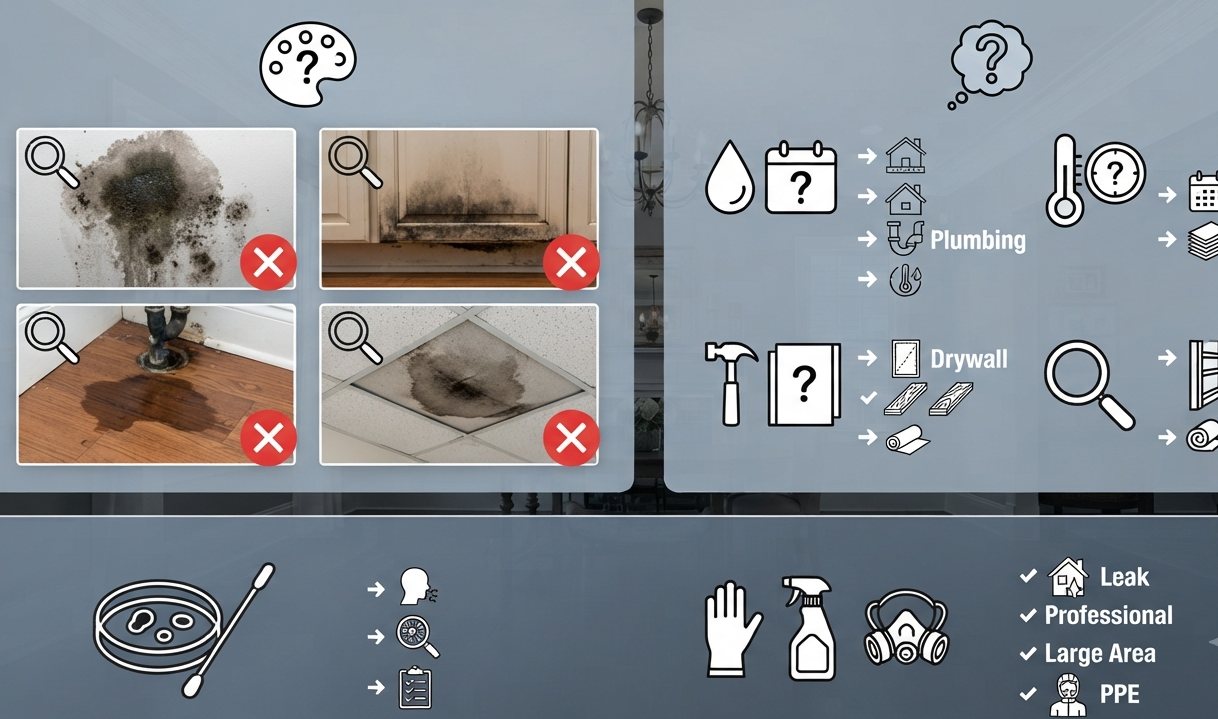
A dark patch on drywall, a cabinet base, or a ceiling can look alarming, especially after a roof leak, plumbing problem, or stretch of humid weather. But black mold in New Orleans homes cannot be identified—or judged for risk—by color alone. The useful questions are where the moisture came from, how long the material stayed damp, what the growth is on, and whether the affected area extends beyond what you can see.
Quick Answer
- Black is a color, not a mold species; several molds can look black, brown, gray, or greenish-black.
- A photograph cannot confirm Stachybotrys chartarum or show whether mold is more dangerous.
- Dark growth indicates a moisture problem, but not its source or full extent.
- Visible mold with an obvious leak often does not need routine testing before cleanup.
- Hidden growth, recurring mold, extensive water damage, contaminated water, or HVAC involvement calls for a more careful assessment.
- Cleaning or painting without correcting moisture makes recurrence more likely.
The Short Answer: Black Is a Color, Not a Diagnosis
The Louisiana Department of Health says black is a color, not a type of mold, and not every black-colored mold is *Stachybotrys*. CDC guidance also says color does not necessarily indicate whether mold is more or less dangerous.
Many molds can appear dark
Indoor mold may look black, brown, olive, gray, or greenish-black. Stachybotrys chartarum is one greenish-black mold associated with persistently wet, cellulose-rich materials such as gypsum board and paper, but it is only one possibility.
Lighting, material, dust, and moisture affect appearance
The same growth can look different depending on the surface, lighting, age, and whether it is wet or dry. Dust, soot, rust, adhesive staining, and old water marks can also produce dark discoloration.
A photograph cannot confirm a mold species
A photo can document location, size, texture, and change over time, but it cannot confirm species. It also cannot show whether insulation is damp, a wall cavity is affected, or the water source remains active.
Why Dark Growth Often Appears After Long-Term Moisture
Dark growth commonly appears where materials stayed damp or were repeatedly wetted. In New Orleans, the moisture story may involve heavy rain, storm-driven water, roof or plumbing leaks, HVAC condensation, a damp crawl space, or materials closed up before drying.
Repeated roof or plumbing leaks
A ceiling stain that darkens after rain or spotting below a sink suggests a water path that may still be active. Repairing the shingle or pipe does not prove nearby drywall, insulation, cabinets, or framing dried completely.
Wet drywall and paper facing
Drywall’s paper facing can support mold when it stays wet. A small front-side patch may be only the visible edge of moisture affecting the back of the board, insulation, or the wall cavity.
Damp cabinets and trim
Cabinet toe-kicks, sink bases, baseboards, and unfinished trim can absorb moisture from slow leaks or repeated condensation. Swelling, softness, separation, or a musty odor may reveal more than surface color.
Long-term condensation
Condensation may form on cold pipes, ducts, vents, or HVAC components when humid air meets a colder surface. If marks return during cooling season, the cause may be condensate drainage, missing insulation, air leakage, or another HVAC moisture issue.
Flooded or incompletely dried materials
After water intrusion, the visible surface can dry while moisture remains under flooring, behind baseboards, or inside walls. Public guidance emphasizes drying wet materials within about 24 to 48 hours when possible; when dark growth follows a recent water event, first learn how to handle wet materials after a leak or storm.
Common Black Mold Myths
The main myths treat color as proof of species, toxicity, or required treatment. The response should instead be based on moisture, material, extent, recurrence, and hidden damage.
Every black spot means the same thing
No. A dark mark may be mold, mildew, dirt, soot, or staining, and even confirmed mold cannot be classified as hazardous from color alone. CDC recommends addressing indoor mold without making cleanup depend on identifying one feared species.
The most dangerous mold is always black
Color is not a risk scale and does not predict an individual response. The practical property decision remains the same: avoid unnecessary disturbance, correct moisture, and handle affected materials appropriately.
Bleach permanently solves the moisture problem
Bleach cannot repair a leak, dry drywall, or remove damaged porous material. EPA does not recommend routine biocide use for mold cleanup and notes that dead mold still must be removed; CDC warns never to mix bleach with ammonia or other cleaners.
Testing the species automatically determines the health risk
A species name is not a medical diagnosis or a pass/fail rating for a building. CDC says there are no health-based indoor-air standards for mold and does not recommend routine air sampling in building evaluations.
A painted surface is a repaired surface
Paint can temporarily hide staining, but it does not clean mold or dry the material beneath it. EPA advises cleaning and drying moldy surfaces before painting because coating moldy material is likely to fail.
What You Can Learn Without Identifying the Species
A species name is often unnecessary for the first property decision. Visible growth, odor, staining, and material changes can already show that moisture control and cleanup deserve attention.
The material has been damp
Mold needs moisture to grow indoors. Ask about recent rain, plumbing or appliance leaks, sweating ductwork, a damp crawl space, roof damage, or earlier flooding.
The water source may still be active
Look for patterns: a stain that changes after rain, odor that strengthens when the AC runs, or softness near a drain. Repeated change is more useful than color when judging whether moisture remains active.
Porous materials may be damaged
Mold can grow into absorbent materials, making complete cleaning difficult. Drywall, insulation, carpet padding, ceiling tile, pressed wood, and paper products may require removal depending on their condition and the extent of growth.
The affected area may extend beyond what is visible
A small baseboard spot may be the edge of moisture behind the wall. EPA lists drywall backs, wallpaper, cabinets, carpet, ceiling materials, and areas around leaking or condensing pipes among possible hidden locations.
When Mold Testing May or May Not Help
Testing is useful when it answers a defined question that changes the investigation, documentation, cleanup, or verification plan. It is often unnecessary when visible growth and an obvious moisture source already establish that action is needed.
Visible growth with an obvious leak
When mold is visible on wet drywall below a known leak, the priorities are stopping water, identifying wet materials, and defining cleanup. Before paying to identify a species, decide whether inspection or testing answers the real question.
Hidden growth suspected behind finishes
Testing is not the only way to investigate concealed mold. Moisture readings, leak history, odor patterns, material condition, and carefully planned inspection openings may provide more actionable information.
Documentation and post-cleanup questions
Sampling may have a role when a transaction, written protocol, managed property, or agreed post-cleanup process requires documentation. EPA notes that surface sampling can sometimes help evaluate whether an area was adequately cleaned, provided the sampling has a clear purpose and qualified interpretation.
Why home test plates can create more questions than answers
A plate that grows colonies mainly shows that spores landed on it under those test conditions. It does not locate moisture, map hidden damage, or compare the building with a health-based standard.
Choosing Between Cleanup and Professional Remediation
The choice depends less on whether mold looks black and more on surface type, size, recurrence, hidden conditions, water source, and exposure during cleanup. The next step depends more on the material and moisture source, so compare mold cleanup, removal, and remediation.
Surface type
A small patch on a washable hard surface differs from growth on drywall, insulation, carpet padding, ceiling tile, or swollen particleboard. Porous materials may hold moisture and growth below the visible surface.
Size and recurrence
EPA says an area smaller than about 10 square feet can often be handled by a homeowner, but exceptions include extensive water damage, contaminated water, possible HVAC contamination, and health concerns. A patch that keeps returning also suggests unresolved moisture.
Hidden cavities
Do not casually remove large areas of drywall, wallpaper, or trim when hidden growth is suspected. Disturbance can spread debris and reveal wet insulation, damaged framing, electrical hazards, or a much larger work area.
Occupant sensitivity and exposure concerns
People with sensitivities or respiratory concerns may want to avoid disturbing visible mold. CDC recommends gloves, eye protection, and at least a NIOSH-approved N95 for cleanup, while people with asthma, COPD, or weakened immune systems should not remain in a moldy home during cleanup.
Water source and material damage
Clean-water condensation is not the same cleanup situation as sewage or floodwater. Extensive saturation, contaminated water, structural damage, HVAC involvement, or multiple affected rooms can make professional assessment and remediation more appropriate.
Health Questions Should Be Kept Separate From Species Marketing
A property assessment can document moisture, visible growth, damaged materials, and likely pathways, but it cannot diagnose illness. Claims that jump from a dark spot to a specific medical conclusion go beyond what color, routine sampling, or a building inspection can establish.
Mold can affect people differently
People may react differently in the same environment, and some may report no symptoms. Individual sensitivity, building conditions, exposure patterns, and other indoor-air factors make color-based medical predictions unreliable.
Property assessment is not medical diagnosis
A property professional can discuss leaks, affected materials, suspected hidden moisture, and cleanup scope. Questions about symptoms, treatment, or personal risk belong with a qualified healthcare professional.
Persistent or worsening symptoms belong with a healthcare professional
Anyone with persistent or worsening health concerns should seek medical guidance rather than relying on a photograph or home test plate. CDC notes that no test proves an association between Stachybotrys chartarum and particular symptoms.
Avoiding unsupported claims about “mold toxicity”
Alarmist black-mold wording is often used without explaining what was measured or what the term is intended to mean. CDC distinguishes toxigenic molds that may produce mycotoxins under some conditions from calling the molds themselves poisonous.
How to Recognize Fear-Based Sales Tactics
Fear-based sales replace a building investigation with a frightening label. A credible scope should explain the moisture source, affected materials, work boundaries, cleanup method, drying plan, and what could change the work.
Declaring a species from color alone
Be cautious when someone identifies *Stachybotrys* from a photo or visual glance. They may describe appearance, but color cannot confirm a species or determine the correct scope.
Using “toxic” without explaining the moisture source
Ask what made the material wet and whether the source is active. A proposal centered on dramatic mold language but silent about leaks, condensation, drainage, or drying is missing the cause of recurrence.
Requiring expensive testing in every visible-mold case
Ask what decision will change based on the result, how samples will be collected, and how findings will be interpreted. Testing without a defined question may add cost without clarifying the repair.
Offering treatment without drying or repair
Fogging, spraying, coating, or wiping cannot substitute for correcting water intrusion and addressing damaged material. A written selection checklist helps you evaluate a remediation company without scare tactics.
Questions to Ask About Dark Growth
The best questions move the conversation from color to cause, extent, material condition, and the decision that must be made. They are useful for homeowners, renters, property managers, and small-business operators.
What made this material wet?
Consider the roof, plumbing, AC condensate, sweating ducts, windows, appliances, drainage, storm intrusion, and previous flooding. If no source is obvious, note when the stain or odor changes.
Is the moisture source still active?
Check whether the area changes after rain, cooling cycles, shower use, or appliance operation. Moisture measurements and inspection of adjacent materials can help separate an old stain from an active problem.
Is the affected material porous?
Tile, metal, and some finished surfaces behave differently from drywall, insulation, carpet, ceiling tile, and pressed wood. The more absorbent the material, the less likely surface wiping will address what is inside it.
Could growth be hidden behind the surface?
Suspect concealed moisture when paint bubbles, baseboards swell, floors cup, cabinets soften, or odor continues after visible cleaning. Avoid destructive opening until electrical, structural, contamination, and containment concerns have been considered.
What information would testing change?
A useful test supports a defined decision, such as a protocol requirement, targeted investigation, documentation need, or agreed post-cleanup check. If mold is already visible, testing merely to prove that “mold exists” may not help define the repair.
What Trusted Public Health and Cleanup Guidance Emphasizes
LDH, EPA, CDC, and FEMA guidance consistently centers mold response on moisture control and safe cleanup rather than color-based alarm.
- Identify and correct the moisture source. Address roof, plumbing, HVAC, drainage, storm, or flood-related water.
- Dry wet materials promptly. Public guidance commonly uses a 24-to-48-hour target when drying is possible and safe.
- Remove mold rather than covering it. Paint or a surface treatment does not resolve damp, damaged material.
- Use appropriate protection. Protect breathing, skin, and eyes, and never mix bleach with ammonia or other cleaners.
- Treat porous materials cautiously. Moldy absorbent materials may not be fully cleanable.
- Seek qualified help for complex conditions. Larger areas, hidden growth, contaminated water, HVAC involvement, or extensive damage require a more controlled response.
Frequently Asked Questions
Is all black mold *Stachybotrys*?
No. Stachybotrys chartarum is greenish-black and can grow on persistently wet cellulose-rich materials, but many molds can appear dark. Louisiana health guidance specifically says black is a color, not a mold type.
Can you identify black mold by looking at it?
No, appearance alone cannot confirm species. Visual inspection can still document location, material condition, water staining, and likely moisture paths, which often matter more to the cleanup decision.
Does black mold always need professional removal?
No, not every small surface patch requires professional remediation. Extensive or recurring growth, porous materials, hidden cavities, contaminated water, possible HVAC involvement, or uncertainty about safe cleanup are reasons to request an assessment.
Should black mold be tested before cleanup?
Usually not when visible growth and the moisture source are already clear. Testing may help with a specific investigation, documentation, or post-cleanup question, but it does not replace finding water and evaluating damaged material.
Can black mold return after it is painted over?
Yes. Paint does not stop a roof leak, plumbing leak, condensation problem, or damp wall cavity, and EPA advises cleaning and drying moldy surfaces before painting. In a New Orleans property, note whether discoloration changes after rain or AC use.
---
Editorial trust note: This article provides general property-care and cleanup information, not medical, environmental consulting, legal, insurance, or product-safety advice. Dark growth should be evaluated through the moisture source, affected material, extent, and possibility of concealed damage—not through color-based assumptions. If you have health concerns, consult a qualified healthcare professional, and avoid disturbing visible mold when you are unsure how to proceed safely.
Discuss Visible Mold or Moisture Concerns
If you have noticed persistent moisture, dark staining, a musty odor, or visible mold in a New Orleans property, call New Orleans Mold Fix at (504) 520-4589 to discuss the affected area, known water history, and practical next steps.