Visible mold on drywall, trim, cabinets, ceilings, attic wood, or crawl-space materials.
Mold Removal in New Orleans for Visible Growth and Affected Materials
Mold removal focuses on visible growth and contaminated materials. If the problem is larger, recurring, or tied to hidden moisture, remediation may be the better fit.
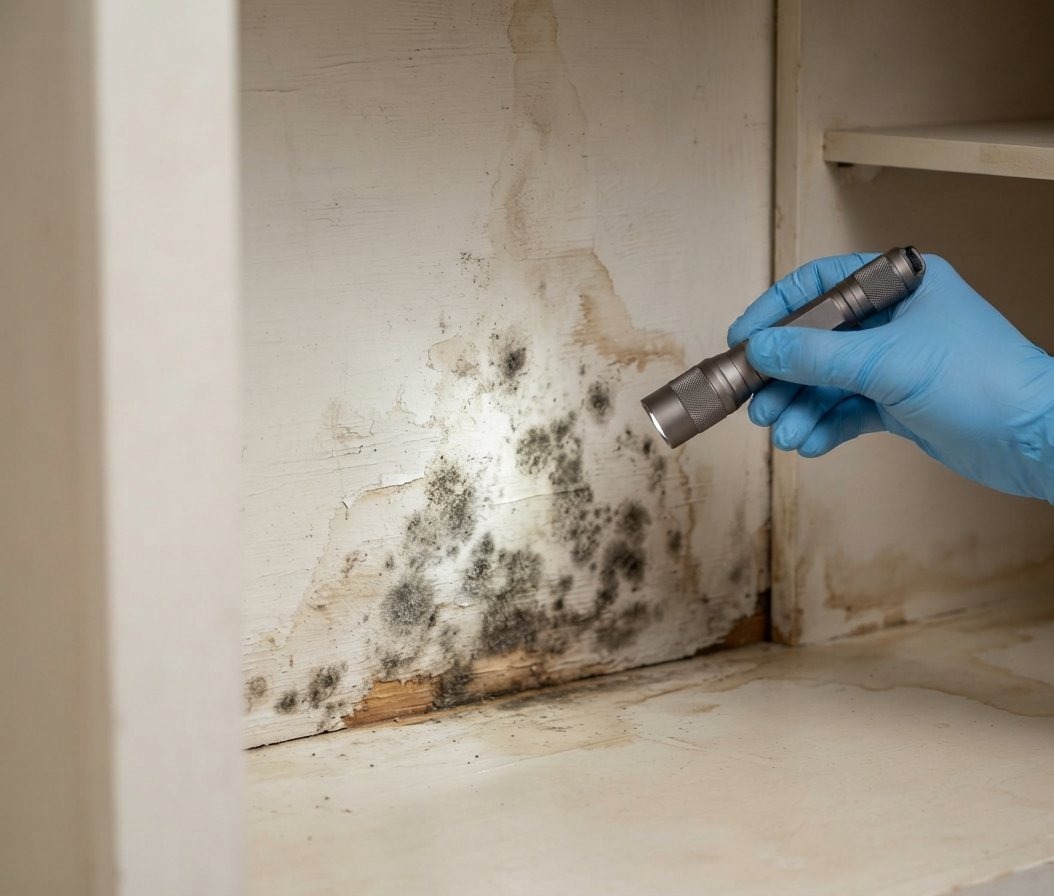
Decide whether the surface can be cleaned or whether affected materials need removal.
Call when growth is visible, spreading, or connected to damp building materials.
Call (504) 520-4589When Visible Growth Raises a Material Question
Mold removal is the relevant conversation when growth is visible on drywall, trim, cabinets, ceilings, attic wood, crawl-space materials, or other surfaces that may be damaged or difficult to clean.
The material matters. A mark on tile is a different problem from growth embedded in paper-faced drywall, insulation, particleboard, or swollen cabinet backing.
Visible conditions people describe
- Dark spotting under a sink or behind a vanity
- Growth along baseboards after a plumbing leak
- Stained drywall that feels soft or crumbles
- Attic sheathing or crawl-space wood with spreading patches
- Bathroom or closet growth that returns after wiping
How a Removal Decision Is Made
Identify the material and extent
Room, surface, size, damage, and nearby materials help determine whether cleaning or physical removal is more appropriate.
Plan the work boundary
Growth should not be disturbed casually when porous material is damaged or the affected area may extend beyond what is visible.
Address adjacent moisture
The leak, condensation, or damp cavity still matters because removing material without correcting moisture invites the same problem back.
Why This Matters in New Orleans
Removal work in New Orleans often involves deciding whether drywall, trim, cabinet backs, attic sheathing, or crawl-space materials can be cleaned or should be removed. Humidity makes that material call more important.
Guidance by location and material
Attic wood and insulation concerns
Common spoken questions
Questions about visible mold removal
Clear answers to the questions New Orleans property owners often ask before they decide what kind of help fits.
Who removes visible mold in New Orleans homes?
For visible growth on drywall, framing, cabinets, attic materials, or crawl-space surfaces, call to discuss mold removal and the moisture event behind it. The right approach depends on the material, affected area, and whether growth extends beyond what is visible.
Can I clean mold from drywall myself?
A tiny surface spot is different from damp, soft, swollen, or repeatedly stained drywall. Porous material can hold growth below the painted face, so recurring or moisture-damaged drywall deserves professional review before it is scrubbed, painted, or disturbed.
Does black mold need a different removal process?
Color alone does not determine the removal method. Dark growth should be handled according to its location, material, moisture source, and extent, with containment and material decisions based on conditions rather than a color label.
When do mold-damaged materials need to be removed?
Removal may be appropriate when porous materials are deteriorated, cannot be cleaned effectively, or remain contaminated after a moisture event. A professional should first determine the affected boundaries so unnecessary demolition is avoided.
Visible Mold Needs a Material-Based Decision
Mold removal starts with what you can see, but the decision is really about the material. Growth on tile grout, painted drywall, raw wood, cabinet backing, insulation, and carpet pad all call for different judgment.
In New Orleans bathrooms and kitchens, the visible patch is often only the easiest part to notice. The surrounding moisture pattern matters: poor ventilation, a slow drain leak, a sweating AC line, or water entering around a window can make the same spot return.
Removal is most appropriate when the visible affected material is the main issue and the source is limited or already understood.
Places Visible Mold Commonly Shows Up
These locations deserve a closer look before deciding whether basic cleaning, removal, or remediation is the right path.
- Bathroom ceilings and upper wall corners where steam sits.
- Cabinet backs and toe kicks after sink or dishwasher leaks.
- Baseboards and trim near exterior walls or windows.
- Attic sheathing or framing after roof or ventilation problems.
- Drywall seams, closets, and laundry areas with limited airflow.
Black-Looking Mold Should Be Handled Calmly
Dark growth gets attention, but color alone does not identify mold type or decide the cleanup scope. A small dark spot on caulk is not the same situation as dark staining across wet drywall.
The useful questions are practical: how large is the area, what surface is involved, is the material porous, has water damage occurred, and is the spot recurring after cleaning? Those details lead to a better decision than panic over color.
Visible mold checklist
Before Disturbing Moldy Materials
If mold is visible, the smartest first move is to understand the surface and the moisture behind it. That is especially true for drywall, trim, cabinets, attic wood, and other porous materials.
Helpful details to have ready
- Approximate size of the visible area.
- Surface type: hard surface, drywall, wood, cabinet, carpet, insulation, or ceiling material.
- Whether the spot returned after cleaning.
- Any leak, storm, HVAC, roof, or plumbing history nearby.
- Whether the area smells musty or feels damp.
Not sure where to go next?
Pick the page that matches the problem, not the keyword
Visible growth does not always mean the whole property needs the same response. These related pages help separate material removal from inspection, testing, cleanup, and full remediation planning.
Describe the Visible Growth and Material
Call with the room, approximate size, surface type, color, damage, and any leak or condensation nearby.