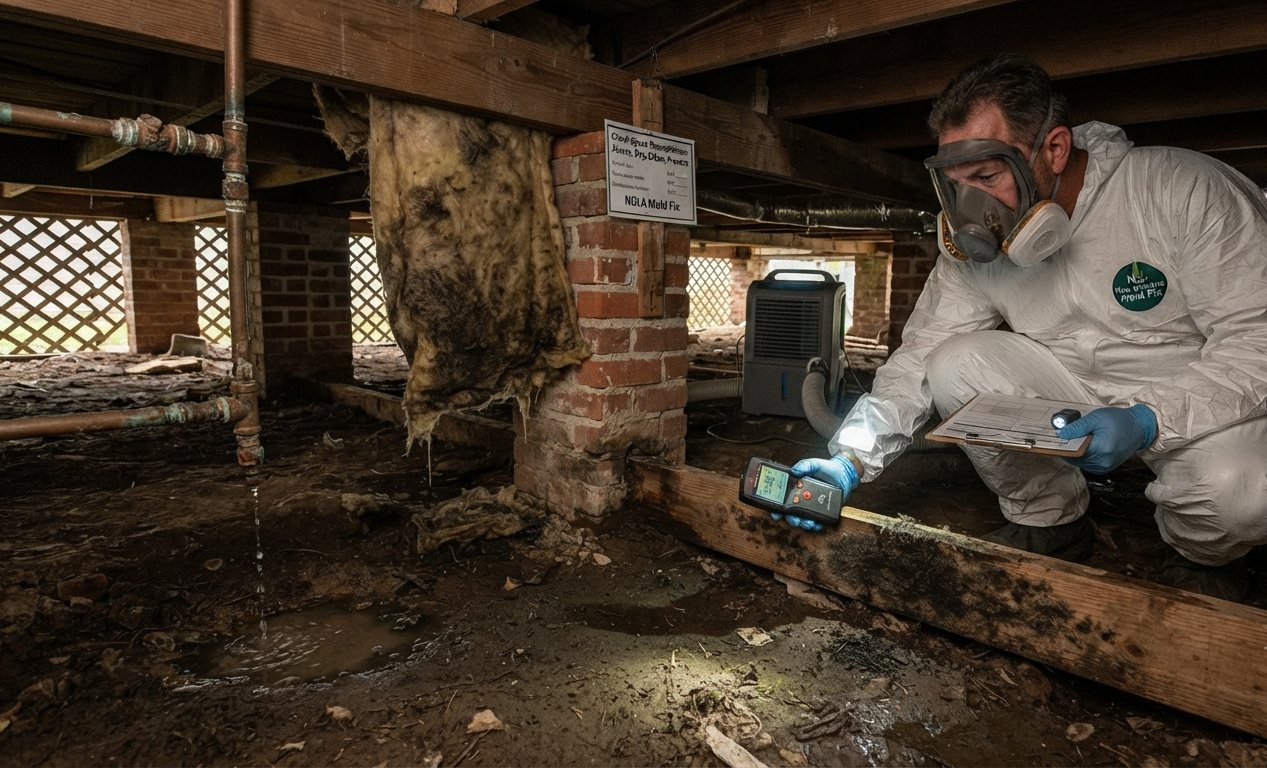
A musty smell near the floor, cupped wood boards, or damp insulation beneath a raised home often points to a moisture problem below the living space. Crawl space mold in New Orleans raised homes is rarely just a surface-cleaning issue because rain, humid outdoor air, plumbing leaks, AC condensation, and wet soil can affect the same structure.
The useful question is not only whether the dark material is mold. The more important question is what keeps the wood, insulation, soil, or ductwork damp enough for the condition to develop or return.
Quick Answer
- Crawl-space mold depends on moisture, so the leak, drainage problem, condensation source, or wet soil must be identified first.
- Musty odors, damp insulation, cupped flooring, dark growth on joists, and sweating ducts are warning signs rather than complete diagnoses.
- Standing water should be addressed before new insulation, vapor-control materials, or cosmetic repairs are installed.
- Open crawl-space vents do not automatically solve humidity problems in New Orleans because humid outdoor air can condense on cooler surfaces.
- Moldy or deteriorated porous insulation may require removal, while structurally sound wood may sometimes be cleaned after the moisture source is corrected.
- Sealing or enclosing a crawl space should be treated as a building-system decision, not as a one-product fix.
Why Crawl-Space Mold Is Different in a Raised Home
Crawl-space mold is different in a raised home because the affected space sits directly beneath flooring, walls, cabinets, plumbing, and HVAC components. Moisture below the house can influence odors, indoor humidity, floor finishes, insulation, and structural materials inside the occupied rooms above.
The crawl space is part of the building’s moisture story
Water can enter a crawl space from several directions. Rain may drain beneath the house from the roof or yard, plumbing may leak from above, soil can release moisture from below, and cold AC ducts can collect condensation from humid air.
These sources frequently overlap. A small plumbing leak may wet insulation, while poor drainage keeps the soil damp and humid air continues to enter around the perimeter. Cleaning one dark patch on a joist will not solve that combination.
The crawl space also contains materials that are easy to overlook. Pipes, condensate lines, floor joists, subflooring, ductwork, insulation, piers, wiring, and exposed soil can all provide clues about where the moisture begins and how far it has traveled.
Odor and humidity can move into occupied rooms
A crawl space is not completely separated from the living area. Air can move through openings around plumbing, wiring, cabinets, baseboards, floor penetrations, and imperfect joints in the subfloor.
When the area beneath the house is damp, a musty odor may become noticeable near the floor, inside lower cabinets, or in rooms above the wettest section. Pressure changes caused by air conditioning, exhaust fans, and wind can also move crawl-space air into occupied rooms.
That does not mean every musty smell comes from below the house. Bathrooms, wall cavities, HVAC components, wet cabinets, and roof leaks can create similar symptoms. The location and timing of the odor help narrow the possibilities.
Common Moisture Sources Beneath New Orleans Homes
The most common crawl-space moisture sources are rainwater, poor drainage, plumbing leaks, flooding, condensation, wet insulation, and uncontrolled humid air. Finding the actual source is more useful than choosing a cleanup chemical before the space has been inspected.
Rainwater draining toward the foundation
Roof runoff can create a crawl-space problem when gutters overflow, downspouts discharge too close to the house, or the yard directs water toward the foundation. During heavy rain, a surprising amount of water can collect near piers, foundation walls, or low areas beneath the floor.
Look for washed soil, splash marks, damp masonry, channels in the ground, and areas that remain soft after the rest of the yard dries. A stain that appears only after rain often points to an exterior water path rather than a plumbing leak.
Extending a downspout may help in one location, but the entire route should be considered. Water still needs somewhere appropriate to go without being redirected toward a neighboring area, walkway, or another side of the house.
Ponding water near piers or foundation walls
Standing water beneath a raised home keeps the soil wet and increases the amount of moisture released into the crawl-space air. Even after the visible puddle disappears, the ground may stay damp for days.
Ponding may result from low soil, blocked drainage routes, settlement, runoff from another property surface, or water entering faster than it can drain. It should be treated as a water-management problem before insulation, plastic ground covering, or a dehumidifier is added.
Covering wet soil without correcting active water entry can hide the condition rather than solve it. The source and drainage path still matter.
Plumbing and drain leaks
Plumbing leaks can be constant, intermittent, or difficult to see from inside the house. A supply-line leak may drip continuously, while a drain connection may release water only when a sink, tub, washer, or toilet is used.
Match the damp area beneath the house with the fixture above it. Staining below a bathroom, laundry room, kitchen sink, water heater, or appliance can provide an immediate clue. Running fixtures one at a time may help identify an intermittent drain leak when it can be done safely.
Condensate piping should also be checked. Water near an AC drain line does not necessarily come from the ground or plumbing system.
Periodic street or yard flooding
Stormwater or yard flooding can carry moisture, dirt, and debris into the crawl space. Insulation may absorb water, floor framing may remain damp, and enclosed pockets can dry much more slowly than visible exterior surfaces.
When water has recently entered the crawl space, begin with what to do after storm or flood moisture enters a property rather than waiting to see whether visible mold develops.
Avoid entering a crawl space when there may be electrical hazards, unstable materials, contaminated water, animals, sharp objects, or extremely limited clearance. Photographs taken safely from the perimeter may still help document the water level and affected area.
Sweating AC ducts and cold pipes
Condensation forms when warm, humid air reaches a sufficiently cold surface. In a New Orleans crawl space, that surface may be an AC duct, metal boot, refrigerant line, cold-water pipe, fastener, or cooled section of the floor assembly.
Water droplets on the outside of ductwork are not always signs of a duct leak. They may indicate missing, compressed, damaged, or poorly sealed insulation around a cold surface.
Look beneath the duct as well as on it. Damp insulation, dark marks on joists, rusted hangers, and repeated wet spots on the ground can show how long condensation has been occurring.
Damp insulation touching the floor structure
Sagging fiberglass insulation can hold moisture against joists and subflooring while hiding the surface that needs to be inspected. Wet insulation may become heavy, detached, compressed, or stained.
When insulation is installed tightly against a cool floor without an appropriate moisture strategy, humid air may reach the assembly and condense. The problem may be worse beneath heavily air-conditioned rooms or where ductwork cools nearby surfaces.
Replacing insulation without understanding why it became wet can lead to the same condition returning.
Limited airflow and blocked openings
Vegetation, stored materials, debris, lattice, later renovations, or pest screens can reduce airflow through a vented crawl space. However, simply adding more outdoor air is not always the correct answer in a hot, humid climate.
Humid outdoor air can enter the crawl space and contact surfaces cooled by the home’s air-conditioning system. Instead of drying the wood, the incoming air may add moisture or produce condensation.
That is why blocked openings should be evaluated as part of the whole design. The answer may involve restoring ventilation, changing the enclosure strategy, improving drainage, or controlling humidity mechanically. One rule does not fit every raised home.
Warning Signs Inside the House
Warning signs inside the house include musty odors, flooring changes, recurring spots near lower cabinets, persistent humidity, and symptoms that become worse after rain. These clues are most useful when they are compared with the room layout and conditions directly below the floor.
A musty smell near the floor
An odor strongest near baseboards, floor vents, pipe openings, or lower cabinets may be entering from beneath the house. It can also collect in rooms with limited airflow, such as closets, guest rooms, or spaces that remain closed for long periods.
The room where the smell is strongest can help identify the pattern behind a musty odor. Note whether the odor becomes stronger after rain, when the AC begins running, or after the home has remained closed.
Fragrance sprays and air fresheners may briefly cover the smell, but they do not identify wet soil, damaged insulation, or hidden water intrusion.
Soft, cupped, or discolored flooring
Wood flooring may cup when its underside contains more moisture than the finished upper surface. The edges of individual boards can rise, seams may become more visible, and the finish may begin to discolor or separate.
Soft spots can indicate damage in the flooring, subfloor, or framing below. A surface that feels normal in dry weather but changes during humid periods deserves closer attention.
Do not replace the floor before checking the space underneath. New flooring can conceal the symptom while the original moisture source continues.
Lower cabinets developing recurring spots
Discoloration around cabinet toe kicks, sink bases, or lower wall sections may come from plumbing, floor moisture, condensation, or growth behind the cabinet.
Compare the affected area with the crawl space below. A wet location beneath a kitchen sink suggests a different repair than widespread dampness below several cabinets along an exterior wall.
Cleaning the visible cabinet surface may be reasonable as a temporary housekeeping step, but recurring marks suggest that the material or surrounding area is still being exposed to moisture.
High indoor humidity despite AC use
Persistent indoor humidity can be related to air leakage, duct leakage, wet crawl-space soil, condensate problems, or HVAC operation. An air conditioner can cool a room without fully resolving the moisture entering from below.
Frequent short cycles may reduce the amount of time the system spends removing moisture from indoor air. Equipment sizing, airflow, refrigerant condition, thermostat settings, and controls are HVAC questions and may require a separate evaluation.
A portable humidity reading can show a pattern, but one reading does not identify the source. Compare different rooms, times of day, and weather conditions.
Odor that worsens after rain
A smell that returns or becomes stronger after heavy rain often points toward drainage, roof runoff, wet soil, or water entering around the perimeter. The odor may not appear immediately because moisture can take time to reach insulation, wood, or indoor air pathways.
Record when the rain began, how long it lasted, and when the odor changed. Then inspect gutters, downspouts, low yard areas, piers, and the corresponding section beneath the house.
Warning Signs Inside the Crawl Space
The strongest warning signs inside a crawl space are active moisture, visible material changes, condensation, standing water, damaged insulation, and deterioration. Dark color alone does not prove that a stain is active mold or reveal how far the problem extends.
Dark or fuzzy growth on joists
Dark spotting, irregular patches, or fuzzy material on joists may be mold, but dirt, old water stains, treatments, and construction residue can look similar.
Document the pattern rather than relying only on color. Growth below one pipe may point to a leak, while a repeated pattern across many cooled floor joists may suggest condensation or general humidity.
The surrounding conditions matter. Dry, solid wood with an old stain is a different situation from damp wood beneath wet insulation.
Wet soil or standing water
Standing water is a direct sign that the crawl space has an unresolved drainage, flooding, plumbing, or discharge problem. Wet soil can remain a significant moisture source even after puddles are gone.
Mark the low areas and try to determine the direction from which the water arrived. Water marks, debris lines, eroded soil, and splash patterns may help reconstruct the route.
A dehumidifier cannot remove water that continues entering through the yard or plumbing system.
Damp insulation
Insulation that is heavy, sagging, stained, compressed, or detached may have been wet for some time. It can hide damaged wood and make inspection difficult.
Avoid pulling down large amounts of questionable insulation without a plan for personal protection, debris control, disposal, and inspection of the surfaces above. People with respiratory concerns or sensitivities may prefer not to disturb visible mold or contaminated materials.
Condensation on ducts
Beads of water, damp seams, rusted fasteners, wet hangers, or staining beneath ducts suggest that condensation is occurring. Check whether the insulation jacket is intact and whether seams are properly closed.
Water concentrated near one connection may indicate a condensate or duct issue. A long wet pattern along the entire run is more consistent with surface condensation.
Rot, corrosion, or insect activity
Soft wood, missing sections, damaged connectors, corroded metal, or insect evidence may indicate conditions beyond mold cleanup. Cleaning does not restore wood that has lost structural strength.
Electrical, structural, plumbing, HVAC, and pest concerns may require separate evaluation. A remediation scope should clearly state which repairs are included and which are not.
Water marks on piers and framing
Horizontal lines on piers, trapped debris, mud stains, or repeated discoloration can show how high water reached during a previous event.
Compare older marks with current dampness. Dated photographs after major rain events can help property owners and managers see whether the same route is being repeated.
Why the Problem May Change With Weather and AC Use
Crawl-space moisture changes with weather and AC use because outdoor humidity, rainfall, soil moisture, and surface temperatures are constantly changing. A crawl space can appear dry during one inspection and become damp again after heavy rain or an extended cooling cycle.
Heavy rain and surface drainage
Heavy rain reveals drainage weaknesses that ordinary showers may not expose. Gutters may overflow, yard depressions may fill, and water may travel beneath the house from an unexpected direction.
When safe, inspect the exterior during rainfall and the crawl-space perimeter after the rain ends. Fresh water paths are easier to identify before the soil dries.
Hot outdoor air meeting cold duct surfaces
Warm outdoor air can hold substantial moisture. When it enters the crawl space and touches a cold AC duct, pipe, fastener, or subfloor, water may condense on the surface.
This is why adding ventilation is not automatically the same as drying. In some conditions, additional humid air can increase the amount of moisture available for condensation.
The pattern may change with thermostat settings and system runtime. Condensation can be most noticeable during long periods of cooling, even when no plumbing leak is present.
Seasonal humidity and closed crawl spaces
A sealed or conditioned crawl space may help limit humid outdoor air when it is designed as a complete system. Closing vents alone, however, can trap wet soil, leaks, or existing damp materials.
Drainage, plumbing, ground vapor, insulation, pests, flood exposure, air sealing, mechanical drying, and equipment safety all need to be considered. The space also needs to remain accessible for future inspection.
AC sizing and short cycling as an HVAC question
An oversized air conditioner may cool the home quickly and shut off before removing as much indoor moisture as expected. Frequent cycling can also involve controls, airflow, equipment condition, or changing building loads.
The crawl-space issue and the HVAC issue may be connected, but they are not the same job. A mold or moisture inspection can document condensation and affected materials, while an HVAC contractor evaluates system performance.
A Logical Crawl-Space Inspection Sequence
A logical inspection begins outside with bulk water, then follows plumbing and HVAC routes before evaluating insulation, visible growth, and symptoms upstairs. This sequence helps avoid focusing on a dark stain while missing the active source.
Start outside with gutters, downspouts, and grading
Walk the perimeter and note where roof runoff lands. Check for overflowing gutters, short downspouts, low soil, eroded areas, blocked drainage paths, and hard surfaces that direct water toward the house.
Do not assume the wettest indoor room sits directly above the point where rain entered. Water can travel along soil, framing, pipes, or building materials before becoming visible.
Check plumbing and condensate routes
Match bathrooms, kitchens, laundry rooms, appliances, water heaters, air handlers, and condensate lines with the crawl-space layout.
Run fixtures individually when it is safe to do so. Watch connections, drain lines, and the ground below. An intermittent leak may be missed when everything is turned off.
Inspect insulation and duct surfaces
Document missing, compressed, sagging, stained, or wet insulation. Check duct seams, boots, hangers, refrigerant lines, pipes, and condensate routes.
Do not judge only from the floor. Use a light to inspect the upper surface of joists and the underside of the subfloor where access allows.
Map visible growth and damaged wood
Create a simple sketch of the house and mark wet soil, visible growth, damaged insulation, plumbing, ductwork, and soft or discolored wood.
A map helps show whether the condition is concentrated below one fixture, follows an exterior wall, or appears beneath several cooled rooms.
Compare crawl-space conditions with symptoms upstairs
Connect each finding below with the room, cabinet, floor, or wall above it. A wet area below a bathroom suggests a different path than general condensation beneath multiple bedrooms.
This comparison also prevents unnecessary demolition in rooms that do not match the moisture pattern.
Cleanup, Removal, and Remediation Decisions
Cleanup, removal, and remediation decisions depend on the affected material, size, recurrence, access, and whether hidden moisture remains. The size and recurrence of the condition help determine whether the project is cleanup, removal, or remediation.
Cleaning accessible structural wood
Structurally sound and accessible wood may sometimes be cleaned after the source of moisture has been corrected. The work should remove surface growth without unnecessarily damaging sound framing.
The cleaned area must also be allowed to dry. Applying paint or a coating over damp wood or visible growth does not address the underlying condition.
Removing damaged insulation
Porous insulation that is moldy, flood-contaminated, deteriorated, or unable to dry may need to be removed. The framing behind it should then be inspected and dried before replacement material is installed.
Limited clearance and insulation removal help explain why crawl-space access changes the remediation estimate. Working beneath a raised home may require additional containment, lighting, access preparation, debris handling, and protection of occupied rooms.
Repairing leaks and drainage first
Active leaks, runoff, ponding, and condensate defects should be corrected before cosmetic restoration. Otherwise, cleaned wood and new insulation may become wet again.
Some emergency steps may happen at the same time as cleanup, but the final plan should clearly identify who repairs the source and how the repair will be checked.
Addressing damaged wood separately
Mold remediation does not confirm that a joist, beam, subfloor, or connector remains structurally adequate. Softened, decayed, cracked, or insect-damaged wood may require a separate repair assessment.
The remediation proposal should state whether structural repairs and flooring replacement are included or handled by another contractor.
Containment and occupied-space protection
Dust and debris can move upward through pipe openings, floor gaps, cabinets, and HVAC pathways. Larger or disruptive projects may require isolation of the work area, controlled debris removal, and protection of rooms above.
The appropriate precautions depend on the extent of work, materials being removed, building occupancy, and access conditions.
Moisture-Control Options Are Not One-Size-Fits-All
No single product or crawl-space package fits every New Orleans raised home. The foundation, drainage pattern, HVAC system, insulation, flood exposure, and current ventilation strategy must be considered together.
Exterior drainage corrections
Bulk water should be addressed first. Review gutters, downspouts, grading, low soil, surface drains, walkways, and discharge routes.
A dehumidifier or ground covering will not overcome recurring ponding beneath the house.
Plumbing and condensate repairs
Repair supply leaks, drain leaks, damaged connections, and condensate problems. Then observe the system during actual use to confirm that the area remains dry.
Do not cover the repair immediately when additional observation would help confirm the result.
Duct insulation
Cold ducts and pipes need continuous insulation appropriate for the assembly. Missing sections, open seams, compressed insulation, and damaged outer jackets can expose cold surfaces to humid air.
An HVAC contractor can also evaluate duct leakage, airflow, equipment operation, and condensate drainage.
Ground vapor-control decisions
Covering exposed soil may reduce the amount of moisture evaporating into the crawl-space air. It is not a substitute for correcting flooding, runoff, or plumbing leaks.
The installation must account for seams, piers, pests, access, durability, drainage, and possible flood conditions. Loose plastic placed over wet ground is not a complete moisture-control plan.
Ventilation or enclosure strategies
Some crawl spaces remain vented, while others are sealed, insulated, and mechanically dried or conditioned. Either strategy needs to match the building and local conditions.
Closing vents without correcting wet soil or providing a drying strategy can trap moisture. Keeping vents open may also allow humid air to reach cold surfaces. The decision should be based on how the specific crawl space manages water, air, heat, and humidity.
Why the existing building design matters
An older open-pier property, a skirted raised home, and a newer enclosed foundation do not manage moisture in the same way. Alterations made over decades may also change drainage and airflow from the original design.
Raised homes benefit from experience with local assemblies, so find a contractor who understands the property type. A useful proposal should explain how the crawl space will drain, dry, remain accessible, and be monitored after the work.
A Seasonal Maintenance Checklist
Crawl spaces should be checked after events that change moisture conditions, including heavy rain, the beginning of cooling season, plumbing work, and flooring repairs. Dated photographs make gradual changes easier to recognize.
After heavy rain
- Check that gutters and downspouts are flowing.
- Look for ponding or newly wet soil beneath the house.
- Inspect piers, framing, insulation, and ductwork from a safe location.
- Note whether indoor musty odors have changed.
- Photograph visible water routes before they dry.
At the start of cooling season
- Check ducts, boots, refrigerant lines, and cold pipes for condensation.
- Inspect insulation for sagging, wetness, or missing sections.
- Watch for unusually frequent AC cycling.
- Compare humidity and odors in different rooms.
- Arrange an HVAC evaluation when condensation continues.
After plumbing or HVAC work
- Inspect the repaired area while the fixture or system is operating.
- Confirm that condensate drains to the intended location.
- Dry wet materials before closing or insulating the area.
- Photograph the repair and recheck it after rain or extended AC use.
Before replacing damaged flooring
- Confirm that the original moisture source has been corrected.
- Inspect the joists and underside of the subfloor.
- Remove or dry affected insulation.
- Allow the assembly to reach a stable dry condition.
- Avoid installing a new floor over an unresolved crawl-space problem.
Practical Crawl-Space Guidance
- Identify and correct leaks, drainage defects, condensation, or flood moisture before expecting cleanup to last.
- Dry affected materials as soon as practical and continue checking areas that may hold hidden moisture.
- Clean suitable hard or structural surfaces only after evaluating their condition and correcting the water source.
- Remove porous materials that are contaminated, deteriorated, or unable to dry adequately.
- Do not paint, seal, or cover visible growth and damp materials as a substitute for cleanup.
- Treat ventilation, enclosure, insulation, ground vapor control, and dehumidification as parts of a complete building strategy.
Frequently Asked Questions
Can crawl-space mold make the house smell musty?
Yes. Odors can move through floor gaps, utility penetrations, cabinets, and duct leaks. A smell strongest near the floor or after rain makes the crawl space a reasonable area to inspect, although walls, plumbing, and HVAC components should also be considered.
Should crawl-space vents stay open in New Orleans?
Not automatically. Open vents may introduce humid air that condenses on cooler ducts or framing, while a sealed crawl space requires drainage, vapor control, insulation, and a reliable drying strategy. The correct approach depends on the existing structure and moisture sources.
Can moldy floor joists be cleaned?
Structurally sound joists with accessible surface growth may sometimes be cleaned after the moisture source is corrected. Soft, decayed, or damaged wood needs separate evaluation because cleaning does not restore lost structural strength.
Does wet crawl-space insulation need to be removed?
It may need to be removed when it is moldy, flood-contaminated, deteriorated, or unable to dry properly. The wood behind it should be inspected and dried before replacement insulation is installed.
Will a dehumidifier solve crawl-space mold by itself?
Usually not. A dehumidifier may help control air moisture in an appropriately designed crawl space, but it cannot repair plumbing leaks, redirect runoff, remove standing water, or restore damaged materials.
Editorial Note
Crawl-space decisions should begin with the movement of water and humid air, not a guess based on color or a single product. Raised New Orleans homes may involve drainage, plumbing, HVAC components, insulation, flood exposure, pests, and structural materials at the same time. This article provides general property-care information and is not medical, engineering, legal, insurance, or policy-coverage advice. If you have health concerns, consult a qualified healthcare professional.
Discuss Crawl-Space Moisture or Visible Mold Concerns
If you have noticed standing water, damp insulation, sweating ducts, recurring odors, or visible mold beneath a New Orleans property, call New Orleans Mold Fix at (504) 520-4589 to discuss the affected area and practical next steps.