Mold or moisture in offices, rentals, retail spaces, multifamily, or managed properties.
Commercial Mold Remediation for New Orleans Properties
Commercial mold concerns need clear routing, property context, moisture source awareness, and practical planning for occupied or managed spaces.
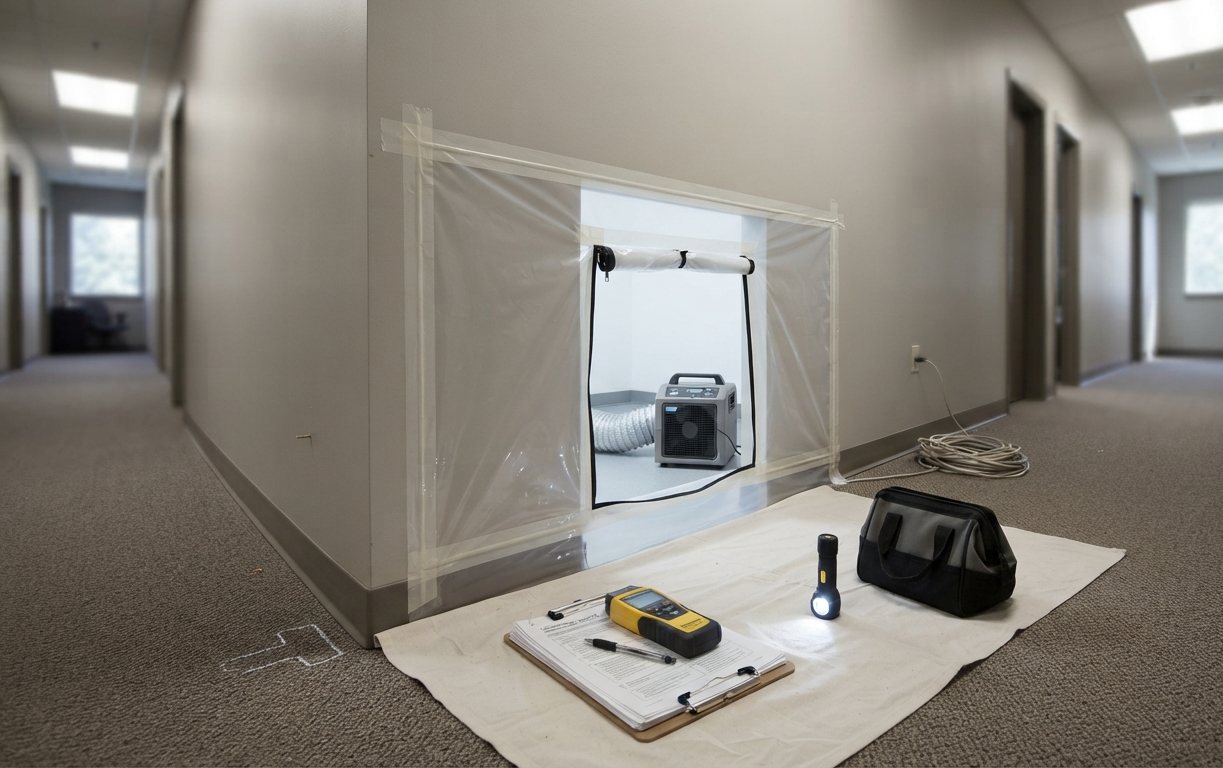
Plan access, containment, communication, documentation, and business disruption carefully.
Call when the property needs coordinated next steps instead of a homeowner-style visit.
Call (504) 520-4589When a Managed Property Needs a Coordinated Response
Commercial remediation fits offices, rentals, retail spaces, multifamily buildings, and managed properties where moisture affects occupied areas, shared systems, or business operations.
The first conversation should cover access, active water, affected materials, occupant communication, documentation needs, and whether work must be phased around normal use of the building.
Situations property teams report
- Wet ceiling tiles or drywall below a roof or plumbing leak
- Recurring odor in an occupied unit, office, or common area
- Condensation around HVAC equipment or shared mechanical spaces
- Growth discovered during tenant turnover or renovation
- A prior repair that did not resolve the moisture pattern
How a Commercial Call Is Organized
Define the building impact
Identify the property type, occupied areas, affected rooms, access limits, and whether water is still entering.
Control moisture and access
Active leaks, wet materials, containment needs, and safe movement through the property shape the immediate priorities.
Plan the documented response
Inspection, testing, remediation, drying, and communication should answer the property manager's specific operational needs.
Why This Matters in New Orleans
In New Orleans commercial spaces, moisture can hide above ceiling tiles, behind shared walls, near HVAC runs, and inside build-outs that were repaired after prior leaks. A managed response needs to account for access, occupants, and documentation.
Common spoken questions
Questions about commercial mold remediation
Clear answers to the questions New Orleans property owners often ask before they decide what kind of help fits.
Who should a property manager call for commercial mold remediation in New Orleans?
Call New Orleans Mold Fix at (504) 520-4589 and describe the property type, affected area, operating schedule, moisture event, and any tenant or staff access concerns. Those details help route the property toward commercial remediation guidance without assuming a residential workflow will fit.
Can a business stay open during mold remediation?
Sometimes, but the answer depends on the affected location, containment plan, air movement, access routes, and how the space is used. Occupancy decisions should be made from the actual work boundaries and property conditions, not from a blanket promise.
Does commercial mold remediation include water damage cleanup?
Not automatically. Active water extraction and structural drying belong to water damage restoration, while commercial mold remediation addresses growth, affected materials, containment, and controlled cleanup. A building with an unresolved leak may need both services in a planned sequence.
Is mold testing required in a commercial building?
Testing is not required for every visible mold condition. It is most useful when sampling answers a defined documentation, comparison, or project question and is interpreted alongside the inspection and moisture findings.
Commercial Mold Work Has More Moving Parts
A commercial mold concern is rarely just a wall issue. It can involve tenants, employees, customers, building access, maintenance records, operating hours, and documentation expectations.
The work path should reduce disruption while still respecting the moisture problem. That means understanding the source, the affected material, the rooms involved, and who needs to be kept informed.
For New Orleans commercial spaces, back rooms, storage areas, HVAC zones, ceiling leaks, and older mixed-use buildings are common places where moisture complaints start.
Information Managers Should Gather First
A clear first call makes commercial triage much easier.
- Who reported the issue and when it was first noticed.
- Whether there is active water or a recent repair history.
- Which rooms, units, offices, or storage areas are involved.
- Whether documentation or post-cleanup testing may be needed.
- Any access limits, business hours, tenant contacts, or safety concerns.
Keeping Commercial Pages Separate From Residential Pages
The commercial page should not be a rewritten residential mold page. Its job is to address logistics, documentation, access, and communication around managed spaces.
If the concern is a simple visible patch in a home bathroom, the residential removal page is a better fit. If the concern affects tenants, operations, records, or multiple rooms, commercial remediation guidance is more relevant.
Managed property clarity
What Property Managers Usually Need
Commercial and rental mold concerns need clear scope language, practical access planning, and careful separation between inspection, testing, cleanup, and water damage work.
Useful call notes
- Which rooms, units, offices, or storage areas are involved.
- Whether tenants, staff, or maintenance reported odor or visible growth.
- Known leak, roof, HVAC, plumbing, or storm history.
- Whether documentation or post-work testing may be needed.
Not sure where to go next?
Pick the page that matches the problem, not the keyword
Commercial properties need clearer routing because tenants, access, building materials, and documentation all matter. These related pages help separate managed remediation from testing, inspection, removal, and drying questions.
Discuss a Managed Property Concern
Call with the property type, affected area, occupancy, access limits, known water source, and any documentation requirements.